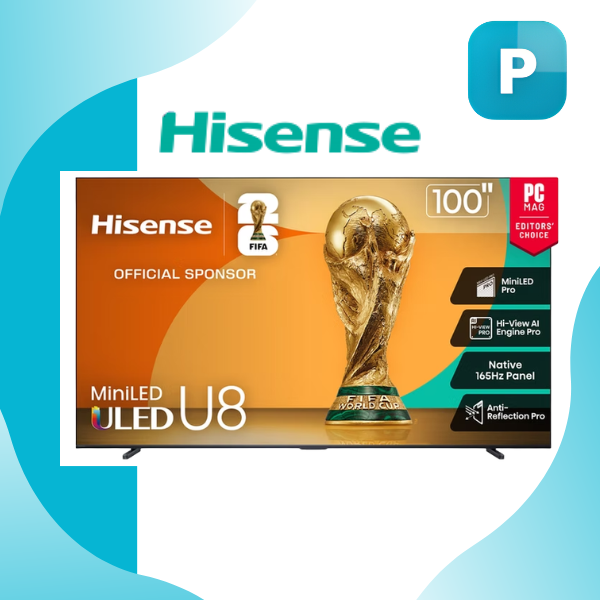
Hisense U8QG TV Review Specifications
Key Features
Hisense U8QG MiniLED
- Up to 5,000 nits peak brightness with MiniLED Pro and thousands of local dimming zones for stunning contrast and minimal haloing.
- Native 165Hz refresh rate with VRR, AMD FreeSync Premium Pro, and Game Mode Ultra for ultra-smooth, low-lag gaming.
- QLED Color technology delivering over a billion shades for vibrant, lifelike hues.
- Total HDR Solution supporting Dolby Vision IQ, HDR10+, HDR10, HLG, and more.
- Anti-Reflection Pro panel to cut glare in bright rooms.
- Hi-View AI Engine Pro for automatic picture and sound optimization.
- 4.1.2 multi-channel audio with Dolby Atmos and up to 72W output including built-in subwoofer and up-firing speakers.
- Google TV platform with built-in Google Assistant, Alexa compatibility, and Wi-Fi 6E.
- Three HDMI 2.1 ports, USB-C display input, and ATSC 3.0 tuner.
Product Description
Table of Contents
The Hisense U8QG TV has quickly become one of those sets that makes you rethink what "value" really means in the premium TV space. I've spent weeks with the 65-inch model in my living room, swapping between intense gaming sessions, late-night movies, and daytime sports marathons, and it's hard not to be impressed. This isn't just another incremental upgrade—it's a seriously bright, feature-packed Mini-LED beast running Google TV that punches way above its price class.
Diving Into the Hisense U8QG TV Review Specifications
Let's start with the core of what makes this TV tick. The Hisense U8QG TV Review Specifications highlight a 4K UHD resolution on a Mini-LED Pro backlight panel, complete with full-array local dimming that uses thousands of tiny zones (over 2,000 in the 65-inch version, scaling up dramatically on larger sizes). Hisense advertises peak brightness up to 5,000 nits, and in real-world testing, it hits impressively high figures—often north of 3,000 nits in HDR bursts—which means highlights pop vividly even in well-lit rooms.
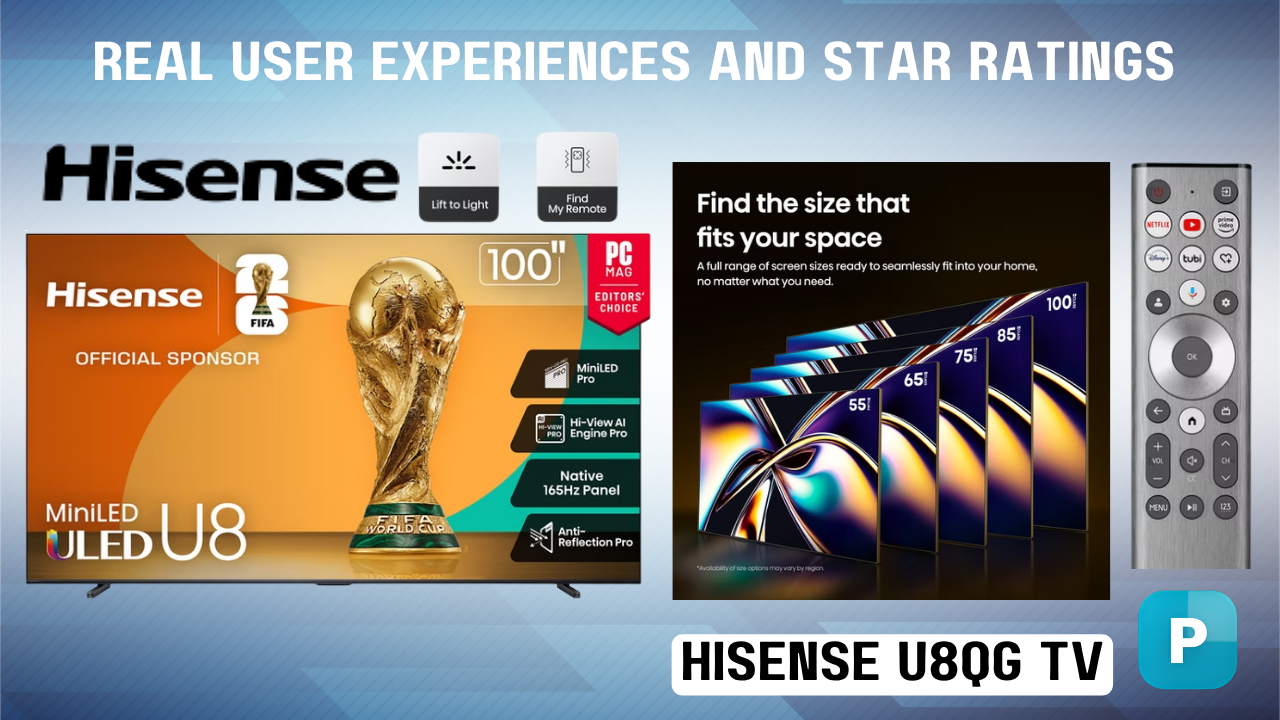
Sizes range from 55 inches all the way up to a massive 100 inches, giving plenty of flexibility whether you're working with a cozy den or a full home theater setup. The panel uses quantum dots (QLED Color tech) for over a billion shades, paired with support for basically every major HDR format you could want: Dolby Vision IQ, HDR10+, HDR10, HLG, and even Advanced HDR by Technicolor. Add in the Anti-Reflection Pro coating, and glare becomes far less of an issue than on many competitors.
What Sets the Picture Apart
Picture quality is where this TV really shines—or rather, explodes with light. The MiniLED Pro backlighting delivers precise control over brightness and shadows. In dark scenes, blacks stay deep and inky without that annoying halo or blooming you sometimes see on lesser local-dimming sets. Switch to something bright like a sunny outdoor sports broadcast, and the screen handles it effortlessly; reflections are minimized, colors stay punchy, and details don't wash out.
The Hi-View AI Engine Pro does a solid job upscaling non-4K content. I threw on some older HD streams, and the processor cleans things up noticeably—edges sharpen, noise drops, and the overall image feels more polished. Motion handling benefits from a native 165Hz refresh rate with MEMC (motion estimation, motion compensation) smoothing. Fast action looks fluid, whether it's a hockey puck zipping across the ice or quick camera pans in action films.
Color performance feels natural after minor tweaks. Quantum dots ensure vibrant yet accurate hues—grass on a soccer field looks realistically lush, skin tones stay lifelike, and there's no oversaturation that plagues some budget QLEDs.
Gaming That Feels Next-Level
If you're a gamer, this is where the Hisense U8QG truly flexes. The 165Hz native refresh rate supports Variable Refresh Rate (VRR) from 48Hz up to the full 165Hz, AMD FreeSync Premium Pro certification, Auto Low Latency Mode, and super-low input lag (around 4-10ms depending on mode). I hooked up a PS5 and a gaming PC, and everything from fast-paced shooters to open-world adventures ran buttery smooth—no tearing, no stutter.
The Game Mode Ultra includes a handy on-screen Game Bar for quick tweaks to settings like brightness or response time. There's even support for higher refresh rates in lower resolutions (like 1080p at 288Hz), though most people will stick to 4K@165Hz. The inclusion of a USB-C port that doubles as an alternate display input is a nice touch for PC users who want easy connectivity without fumbling behind the TV.
⭐⭐⭐⭐⭐ – Gaming performance
Sound That Actually Delivers (Mostly)
Audio often gets overlooked, but Hisense went big here with a 4.1.2 multi-channel setup pumping out up to 72W (or 82W in some descriptions). You've got main left/right channels, dedicated surrounds, a built-in subwoofer for solid bass, and up-firing speakers for height effects. Dolby Atmos support makes a real difference—overhead sounds in movies feel immersive, like rain falling around you or helicopters flying above.
It's not going to replace a dedicated home theater system, but for built-in TV audio, it's surprisingly capable. Dialogue stays clear, bass has punch without muddiness, and there's minimal distortion at higher volumes. For casual viewing or when you don't want extra gear, it's more than adequate.
⭐⭐⭐⭐ – Built-in audio quality
Everyday Use and Smart Features
Living with this TV day-to-day has been straightforward and enjoyable. Google TV is smooth and app-rich—Netflix, YouTube, Disney+, Prime Video all load quickly, and the interface feels snappy thanks to the powerful processor. Voice control via Google Assistant works reliably, and the backlit remote with motion sensor is a small but welcome luxury.
Connectivity includes three HDMI 2.1 ports (all full-bandwidth, one with eARC), Wi-Fi 6E for stable streaming, Bluetooth 5.3, Ethernet, USB ports, optical out, and even ATSC 3.0 for next-gen over-the-air broadcasts. Power draw is reasonable at around 310W max, dropping to under 0.5W in standby.
One minor nitpick: only three HDMI ports might feel limiting if you have a ton of devices, but the side-mounted USB-C helps offset that for quick laptop or phone mirroring.
Real-Life Moments That Stood Out
Picture this: It's a sunny Saturday afternoon, and the living room is flooded with natural light from big windows. I'm watching a Premier League match, and normally I'd struggle with glare or washed-out colors on many TVs. But on the Hisense U8QG, the Anti-Reflection Pro coating and insane brightness kept everything crisp—the ball's trajectory was easy to track, crowd details popped, and colors looked vibrant without looking artificial.
Later that evening, we dimmed the lights for a horror movie marathon. The deep blacks and precise dimming made shadowy scenes genuinely tense; no distracting light bleed ruined the mood. When explosions lit up the screen, highlights were blindingly bright in the best way—real impact without crushing details in darker areas.
Gaming sessions felt responsive and immersive. Dodging attacks in a fast-paced title, the low lag and high refresh rate made every input feel instant. Friends over for a tournament were blown away by how smooth it all looked.
Wrapping It Up
After extended hands-on time, it's clear why this set earns so much praise from outlets like PCMag (Editor's Choice), TechRadar (4.5 stars), and others calling it a top value pick. The combination of extreme brightness, strong contrast from Mini-LED dimming, excellent gaming chops, and solid smart features makes it a standout.
The Hisense U8QG TV Review Specifications paint a picture of a TV that's not just competing—it's often leading in key areas like brightness and refresh rate for the money. Sure, there are minor trade-offs like the HDMI count or occasional slight blooming in extreme tests, but they fade when you see the overall performance.
⭐⭐⭐⭐⭐ – Picture quality in bright rooms
⭐⭐⭐⭐⭐ – HDR performance
⭐⭐⭐⭐ – Upscaling and motion
If you're hunting for a high-end experience without the OLED price tag, this one's tough to beat. I've recommended it to several friends already, and after living with it, I'd do the same again in a heartbeat.
Overall, if you're hunting for a TV that delivers flagship-level brightness, contrast, and gaming chops at a fraction of the cost of OLEDs or top-tier brands, the Hisense U8QG feels like a no-brainer in 2025-2026. It's not flawless, but the real-world performance makes it one of the smartest picks out there right now.

Frequently Asked Questions
What makes the Hisense U8QG stand out from previous models?
Is the Hisense U8QG good for bright rooms?
Does it support high refresh rate gaming?
How is the sound quality on the Hisense U8QG?
What HDR formats does the Hisense U8QG support?
Is Google TV easy to use on this TV?
Does the Hisense U8QG have good color accuracy?
What sizes is the Hisense U8QG available in?
Pros
- Insane brightness levels make HDR pop in any lighting—I've watched daytime sports and it handles window glare way better than most LEDs.
- Deep blacks and precise local dimming rival pricier sets, giving movies real cinematic punch without obvious blooming in most scenes.
- Gaming feels responsive and fluid at high refresh rates; the low input lag and extra features like 1080p@288Hz are a bonus for PC or console players.
- Built-in audio is surprisingly immersive—Dolby Atmos height effects actually add dimension to games and action films.
- Great value; it punches way above its price with premium features and solid build.
Cons
- Some minor blooming can show up around bright objects in very dark scenes, though it's not distracting for most content.
- Only three HDMI ports might feel limiting if you have multiple next-gen devices.
- Glare handling isn't perfect in super bright rooms with direct reflections.
- Motion in fast non-gaming content can occasionally show slight blur due to pixel response times.
- The remote is functional but nothing fancy—no backlight on all buttons.
Customer Reviews
View All ReviewsWrite a Review
Recent Reviews (0)
No reviews yet
Be the first to review this product!
Related Products
More products from TV & Smart TV
Related Comparisons
See how this product compares to others