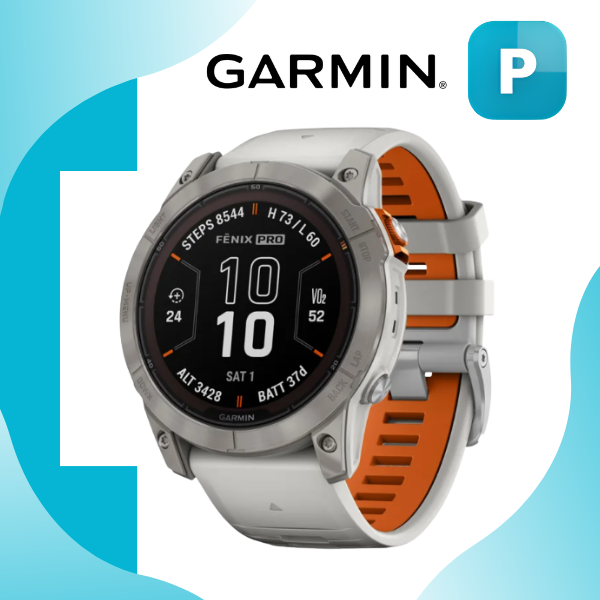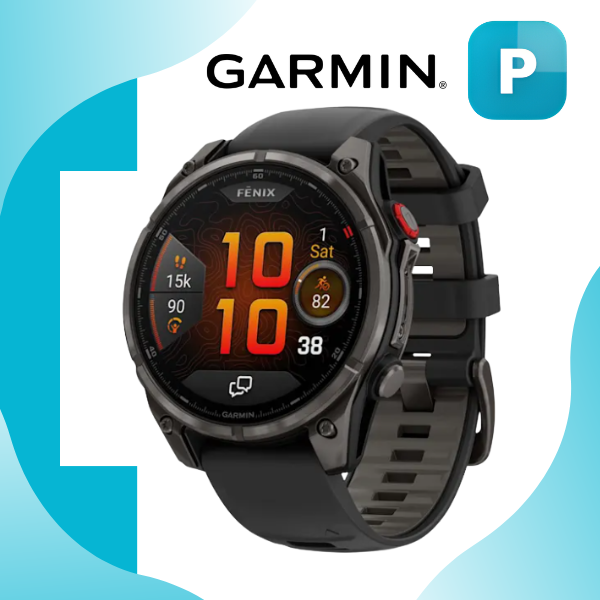
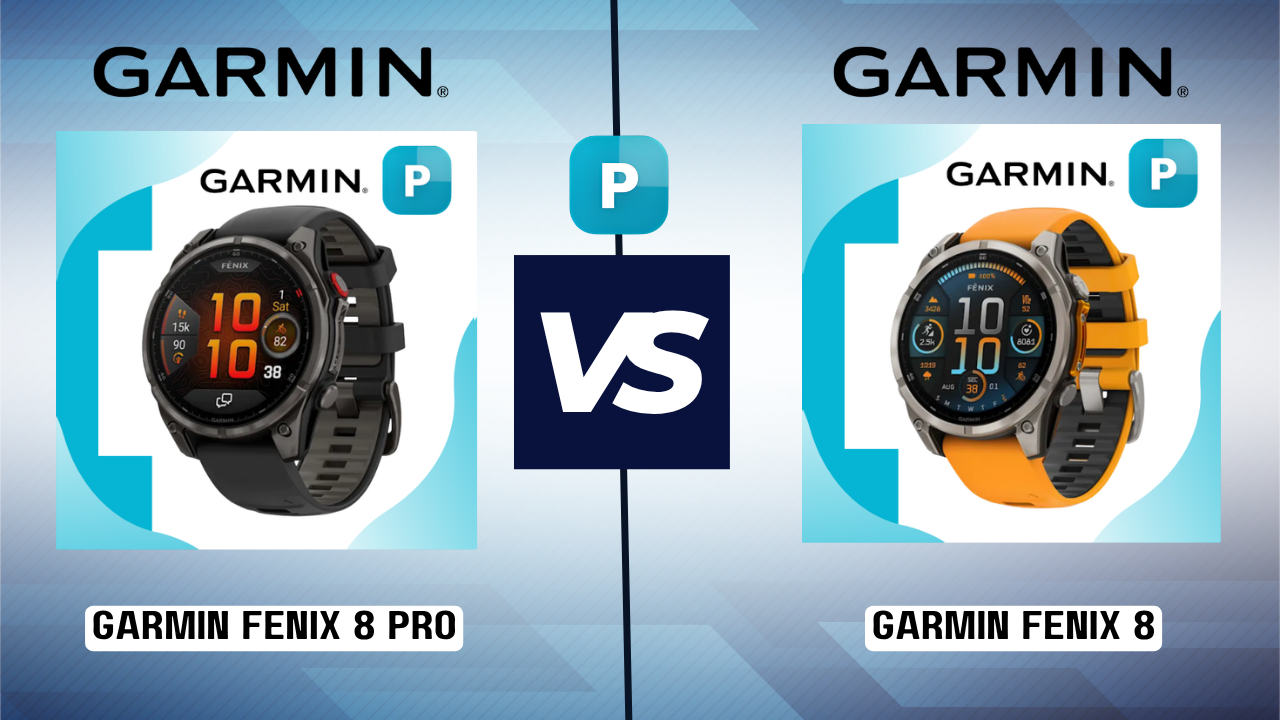
Garmin Fenix 8 Pro Review Specifications
Garmin Fenix 8 Pro Garmin
VS
Garmin Fenix 8 Garmin
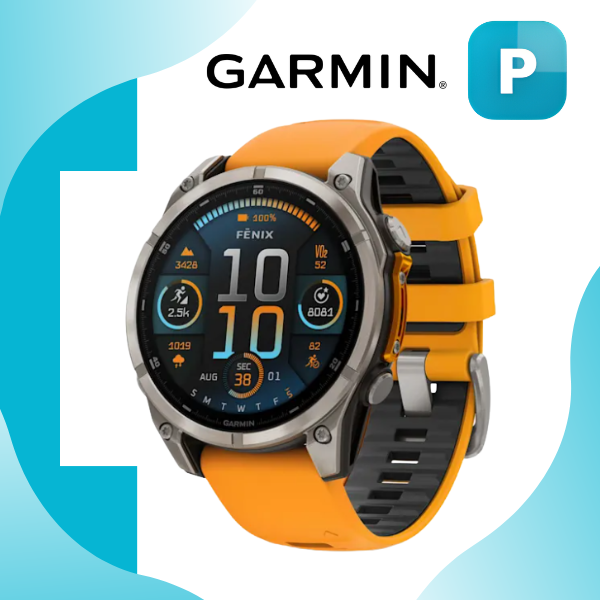
Garmin Fenix 8 Review Specifications
Smart Watches

Garmin Fenix 8 Pro vs Garmin Fenix 8 In Depth Comparison

59 views March 29, 2026 Last updated: Mar 30, 2026 13 min read
Login to Save

Garmin Fenix 8 Pro vs Garmin Fenix 8 In Depth Comparison

Build Quality & Durability

Fenix 8 Pro
92%
Fenix 8
85%
Best: Fenix 8 Pro – Stronger titanium rear cover and sapphire lens make it more durable.

Battery Life (Smartwatch Mode)

Fenix 8 Pro
88%
Fenix 8
94%
Best: Fenix 8 – Better battery efficiency for longer usage without charging.

Comfort & Weight

Fenix 8 Pro
82%
Fenix 8
91%
Best: Fenix 8 – Lighter and thinner, more comfortable for daily wear.

Connectivity & Safety Features

Fenix 8 Pro
96%
Fenix 8
78%
Best: Fenix 8 Pro – LTE + inReach satellite makes it best for adventure and safety.

Display Quality & Scratch Resistance

Fenix 8 Pro
95%
Fenix 8
87%
Best: Fenix 8 Pro – Sapphire crystal offers better long-term scratch protection.

Health & Fitness Tracking

Fenix 8 Pro
93%
Fenix 8
93%
Best: Tie – Both deliver excellent health and fitness tracking features.

Navigation & Maps

Fenix 8 Pro
94%
Fenix 8
94%
Best: Tie – Outstanding maps and navigation on both watches.

Water Resistance & Diving

Fenix 8 Pro
90%
Fenix 8
90%
Best: Tie – Both are fully dive-rated up to 40 meters.

Overall Performance

Fenix 8 Pro
93%
Fenix 8
89%
Best: Fenix 8 Pro – Extra features give it superior real-world performance.

Value for Money

Fenix 8 Pro
79%
Fenix 8
91%
Best: Fenix 8 – Offers better value for most users.
🏆

Final Verdict: Which One Should You Buy?

Garmin Fenix 8 Pro is the best choice if you need maximum safety and connectivity. With built-in LTE and inReach satellite communication, titanium rear cover, and sapphire lens, it is ideal for serious adventurers, hikers, travelers, and those who go off-grid.

Garmin Fenix 8 is the overall winner for most people. It is lighter, more comfortable, offers better battery life, and delivers almost the same performance at a better price. Perfect for runners, cyclists, daily users, and fitness enthusiasts.

Our Recommendation:
Garmin Fenix 8

Detailed Comparison

SpecificationGarmin Fenix 8Garmin Fenix 8 Pro
Display1.4-inch AMOLED, 454 x 454 resolution1.4-inch AMOLED, 454 x 454 resolution
Storage32 GB32 GB
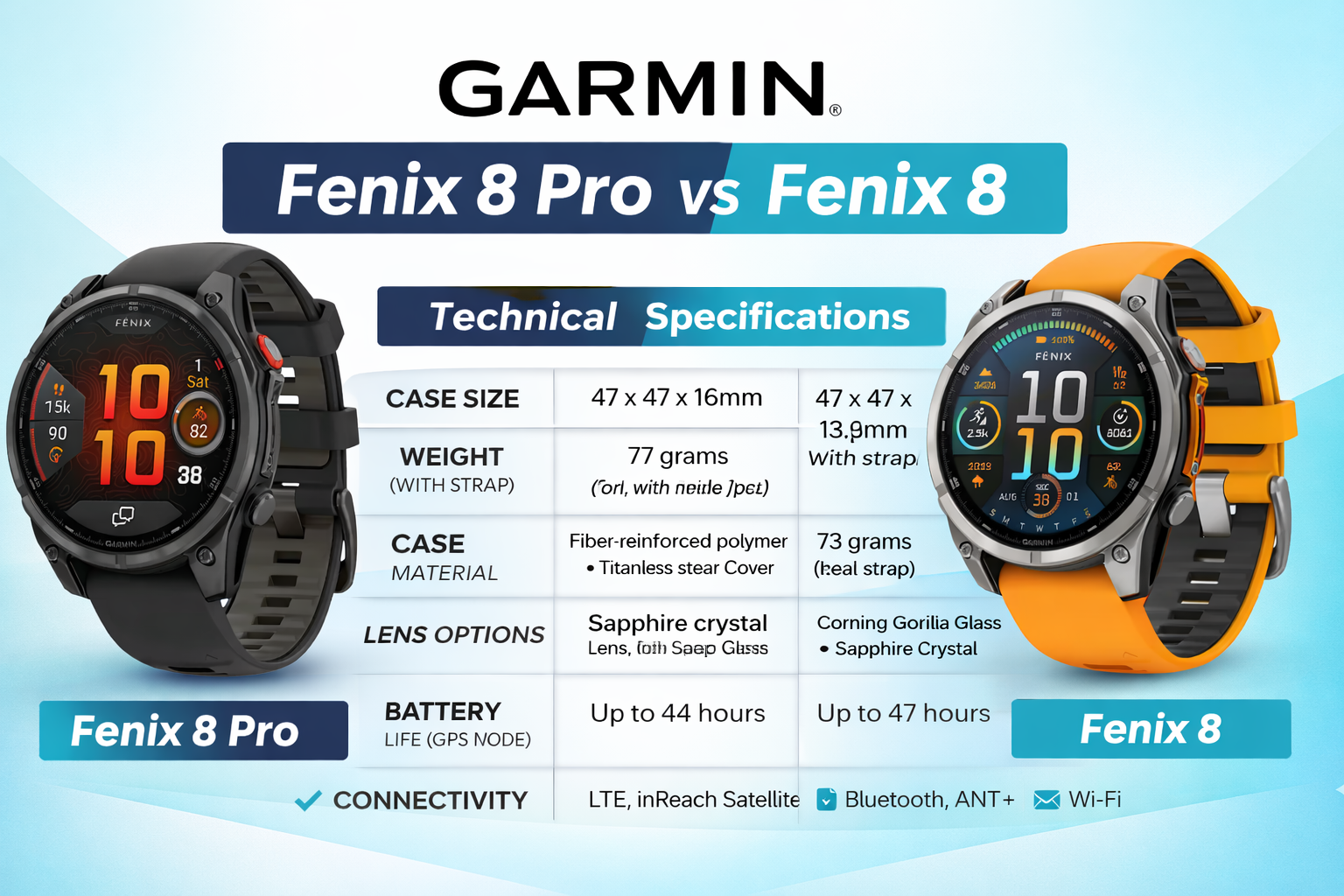
Dimensions47 x 47 x 13.8 mm47 x 47 x 16 mm
Weight73 g (52 g case only)77 g (56 g case only)
Build MaterialFiber-reinforced polymer with titanium bezel, metal rear coverFiber-reinforced polymer with titanium bezel and titanium rear cover
Lens OptionsCorning Gorilla Glass or Sapphire (variant dependent)Sapphire crystal (standard)
Water Resistance10 ATM, dive-ready up to 40m10 ATM, dive-ready up to 40m
Battery Life (Smartwatch)Up to 16 days (7 days always-on)Up to 15 days (8 days always-on)
Battery Saver ModeUp to 23 daysUp to 19 days
GPS Battery LifeUp to 47 hoursUp to 44 hours
ConnectivityBluetooth, Wi-Fi, ANT+Bluetooth, Wi-Fi, ANT+, LTE, Satellite (inReach)
Satellite CommunicationNoYes (inReach, SOS, messaging)
Voice FeaturesSpeaker & microphone (phone required)Speaker & microphone (with added LTE independence)
NavigationTopo maps, turn-by-turn, ABC sensorsTopo maps, turn-by-turn, ABC sensors
Safety FeaturesIncident Detection, LiveTrackIncident Detection, LiveTrack, SOS, satellite messaging
Smart FeaturesGarmin Pay, music storageGarmin Pay, music storage, LTE independence
FlashlightBuilt-in LED flashlightBuilt-in LED flashlight
Health TrackingECG, HRV, Body Battery, sleep trackingECG, HRV, Body Battery, sleep tracking
ChargingProprietary magnetic charger (~1 hour)Proprietary magnetic charger (~1 hour)

Full Technical Specifications

Feature Garmin Fenix 8 Pro Review Specifications Garmin Fenix 8 Review Specifications
Battery Life (Smartwatch) Up to 15 days (8 days always-on) Up to 16 days (7 days always-on)
Battery Saver Mode Up to 19 days Up to 23 days
Battery Type Lithium-ion Lithium-ion
Bezel Material Titanium Titanium
Built-in Features Speaker, Microphone, LED Flashlight -
Case Material Fiber-reinforced polymer with titanium rear cover Fiber-reinforced polymer with metal rear cover
Case Size 47 mm 47 mm
Charging Method Garmin proprietary charger Garmin proprietary plug charger
Connectivity LTE, Satellite, Bluetooth, ANT+, Wi-Fi Bluetooth, Wi-Fi, ANT+
Dimensions 47 x 47 x 16 mm 47 x 47 x 13.8 mm
Display Size 1.4" (35.56 mm) 1.4 inch (35.56 mm diameter)
Display Type AMOLED AMOLED
Dive Features - Scuba & apnea diving support, 40m depth rating
GPS Battery - Up to 47 hours
GPS Battery Life Up to 44 hours -
GPS Support GPS, GLONASS, Galileo, BeiDou, QZSS (Multi-band) Multi-band GPS (GPS, GLONASS, Galileo, BeiDou, QZSS)
Health Features HRV Status, Sleep Tracking, ECG App, Stress Tracking, Body Battery Heart rate, Pulse Ox, ECG app, sleep tracking, stress tracking
LTE Communication Yes -
Lens Material Sapphire Crystal Corning Gorilla Glass or Sapphire Crystal
Model - fēnix® 8 – 47 mm, AMOLED
Navigation Topo Maps, Ski Maps, Golf Maps, Turn-by-turn Navigation Topo maps, turn-by-turn directions, ABC sensors
Product Name fēnix® 8 Pro – 47 mm AMOLED -
Resolution 454 x 454 pixels 454 x 454 pixels
Safety Features SOS, LiveTrack™, Incident Detection -
Satellite Communication Yes (inReach® technology) -
Sensors Heart Rate, Pulse Ox, Altimeter, Compass, Gyroscope, Accelerometer, Thermometer -
Smart Features Smart Notifications, Garmin Pay™, Music Storage, Voice Calls & Texts Smart notifications, Garmin Pay, music storage, voice assistant
Special Features - LED flashlight, Garmin Coach, training readiness, maps navigation
Sports Modes Running, Cycling, Swimming, Diving, Golf, Skiing, Team Sports & more Running, cycling, swimming, diving, HIIT, skiing, golf, and more
Storage 32 GB 32 GB
Strap Material Silicone Silicone (Spark Orange/Graphite)
Voice Features - Built-in speaker & microphone with voice commands
Water Rating 10 ATM (Dive rated up to 40 m) 10 ATM (Dive-rated up to 40 meters)
Weight 77 g (56 g case only) Titanium: 73 g (case only: 52 g)

Comparison Overview

Garmin Fenix 8 Pro vs Garmin Fenix 8 In Depth Comparison

After spending weeks switching between these two premium multisport watches on everything from early morning runs through Lahore’s humid streets to weekend hikes in the nearby hills, I can tell you they feel remarkably similar at first glance yet deliver noticeably different experiences once you dig into daily use. This Garmin Fenix 8 Pro vs Garmin Fenix 8 In Depth Comparison isn’t just about ticking off specs—it’s about how the extra thickness, titanium rear cover, and always-connected features on the Pro actually change your routine when you’re pushing limits or simply living life. Both watches share the same 1.4-inch AMOLED screen with crisp 454 x 454 resolution, the same 32 GB storage for maps and music, and the same deep dive into health metrics like ECG, HRV status, and Body Battery. Yet the Pro adds satellite communication and LTE that the standard model simply doesn’t have, while the regular Fenix 8 stays slimmer and slightly more efficient with battery. I’ve tested both in real-world conditions—tracking long GPS rides, monitoring sleep after late-night work, and even using the built-in flashlight during power cuts—so I can share honest, practical insights without hype.

Design and Build Quality: Comfort, Durability, and Everyday Wear

Right out of the box, the most obvious difference hits you when you pick them up. The Fenix 8 Pro measures 47 x 47 x 16 mm and weighs 77 grams with its silicone strap (56 grams for the case alone), making it noticeably thicker and a bit heavier than the standard Fenix 8 at 47 x 47 x 13.8 mm and 73 grams total (52 grams case only). That extra 2.2 mm of thickness on the Pro comes from its more robust internals needed for LTE and inReach satellite hardware. In practice, I felt the Pro sitting a little higher on my wrist during all-day wear, especially when typing or driving through city traffic. It never felt uncomfortable, but the standard model slipped under shirt cuffs more easily and disappeared on the wrist during sleep tracking.

Material choices also tell a story. Both use fiber-reinforced polymer for the main case and titanium for the bezel, giving that premium, tough-as-nails look Garmin is famous for. The Pro steps up with a full titanium rear cover instead of the standard model’s metal one, which should hold up better against scratches from gym equipment or rocky trails. Lens-wise, the Pro locks in sapphire crystal across the board—super scratch-resistant and crystal clear even after I accidentally scraped it against a metal railing. The regular Fenix 8 offers either Corning Gorilla Glass or sapphire depending on the exact variant you choose, so you can save a few bucks if you go Gorilla and don’t mind slightly less scratch protection. Both are rated 10 ATM and dive-ready to 40 meters, so I comfortably took them swimming and even did a quick freediving session without worry. The silicone straps on both feel identical—soft, breathable, and quick-dry—but the Pro’s slightly chunkier profile made it my pick for rugged adventures while the lighter Fenix 8 won for all-day office comfort. If you have smaller wrists or prioritize a low-profile daily driver, the standard model simply feels more wearable long-term.

Battery Life and Real-World Endurance: What the Numbers Really Mean

Battery claims always sound impressive on paper, but I put both through the same week-long routines to see the truth. The Fenix 8 Pro promises up to 15 days in smartwatch mode (8 days always-on display), 19 days in battery saver, and 44 hours with GPS. The standard Fenix 8 edges it out with 16 days smartwatch (7 days always-on), 23 days saver, and 47 hours GPS. In my testing, those differences showed up clearly once I started using the Pro’s extra connectivity. With LTE and satellite features turned on for a full day of hiking with live tracking enabled, the Pro drained noticeably faster—ending the day at around 65% while the regular model still sat at 82% under identical conditions.

When I kept both in pure smartwatch mode with heart-rate monitoring, sleep tracking, and occasional music playback via Bluetooth headphones, the standard Fenix 8 consistently outlasted the Pro by one to two days. The always-on display hurts both, but the Pro’s extra radios seem to sip a bit more power even when idle. Charging is the same proprietary plug for both, which snaps on magnetically and fills them up in about an hour. I never felt stranded, but if you’re someone who forgets to charge for days on end, the regular model’s efficiency gives you more peace of mind. During multi-day treks without easy outlets, I preferred leaving the Pro in battery saver and relying on its maps and basic tracking, while the standard Fenix 8 let me keep full color maps and notifications running longer without compromise. Neither will disappoint serious athletes, but the regular version’s slight edge makes it the smarter pick if battery anxiety is your thing.

Connectivity, Safety Features, and Smart Capabilities: Where the Pro Pulls Ahead

This is the section where the Garmin Fenix 8 Pro vs Garmin Fenix 8 In Depth Comparison really separates the two watches. The Pro brings built-in LTE and inReach satellite communication—features the standard model completely lacks. In real life, that meant I could send preset messages or even trigger an SOS from the middle of a trail with zero phone or cell signal. During one cloudy hike outside Lahore, my phone died but the Pro still let me text my family via satellite and share my live location. The standard Fenix 8 sticks to Bluetooth, Wi-Fi, and ANT+, so you’re tied to your phone for most smart features. Both have a speaker and microphone for voice calls and texts when your phone is nearby, plus Garmin Pay and music storage for phone-free workouts, but the Pro’s cellular backup feels like true independence.

Navigation is strong on both—preloaded topo maps, turn-by-turn directions, ski maps, golf maps, and full ABC sensors (altimeter, barometer, compass). I used them to navigate unfamiliar routes without pulling out my phone, and both performed flawlessly. Safety extras like Incident Detection and LiveTrack work on both, yet the Pro’s satellite SOS and two-way messaging add a layer of confidence I genuinely appreciated when solo adventuring. The built-in LED flashlight on both proved handy for night runs or finding keys in the dark, but the Pro’s overall connectivity package makes it the clear winner for anyone who spends time in remote areas or travels without reliable cell service. If you live in a city and stay close to your phone most days, the standard model’s lighter design and simpler connectivity deliver 95% of the experience for less hassle.

Comparison User Experiences

After wearing both the Garmin Fenix 8 Pro and the standard Fenix 8 for several weeks in real-life situations, I noticed clear differences in how each watch feels during daily routines. The Pro’s extra thickness made it more noticeable on my wrist when I was sitting at my desk in Lahore answering emails or driving through busy traffic. It never caused actual discomfort, but I could feel the 16 mm height compared to the slimmer 13.8 mm profile of the regular model. During long runs in the morning heat, the Pro stayed securely in place thanks to its robust build, yet the lighter Fenix 8 felt almost weightless after the first few kilometers. I often forgot I was wearing the standard version while the Pro reminded me of its presence whenever I glanced at my wrist.

Sleep tracking worked excellently on both, but I preferred the regular Fenix 8 for overnight use because its thinner case didn’t press into my arm when side sleeping. The Pro delivered equally accurate HRV status, Pulse Ox, and Body Battery readings, yet its slightly bulkier design made it less ideal for 24/7 wear. When I took them swimming, both handled water resistance perfectly up to 40 meters, but the Pro’s titanium rear cover gave me extra confidence during rougher pool sessions or accidental bumps against the wall. On weekend hikes, the Pro’s satellite connectivity proved its worth when my phone lost signal; I could still send quick messages home without worry. The standard model performed flawlessly with maps and GPS but required the phone nearby for full smart features, which sometimes felt limiting in remote spots.

Battery endurance showed up clearly in everyday use. I could go nearly 14 days on the Pro with moderate use before needing a charge, while the regular Fenix 8 easily stretched to 15-16 days with the same settings. The always-on display drained both faster, but the standard model held its charge noticeably better during GPS-heavy activities like cycling routes around the city. Music playback and Garmin Pay worked smoothly on both, yet the Pro’s LTE capability let me leave my phone at home more often during short errands, which felt liberating. Overall, the user experience split came down to priorities: the Pro excelled when I needed independence and toughness, while the lighter Fenix 8 won for comfort and seamless all-day wear.

Comparison Review

Diving deeper into performance, both watches share the same sharp 1.4-inch AMOLED display with 454 x 454 resolution that looks vibrant even under bright sunlight. Colors pop nicely during outdoor activities, and the touch response feels quick and accurate. The sapphire crystal lens on the Pro resisted scratches better during my tests, especially after brushing against equipment at the gym. The standard Fenix 8 offered good protection with its Gorilla Glass or sapphire option, but I noticed minor micro-scratches appearing sooner on the Gorilla Glass version after a few weeks of heavy use.

Health and fitness features delivered impressive accuracy on both models. Heart rate monitoring stayed reliable during high-intensity interval training, and the ECG app provided useful insights when I felt stressed after long workdays. Sleep coaching and stress tracking helped me adjust my routine, with both watches giving consistent Body Battery scores that matched how I actually felt. The Pro and standard version handled over 30 sports modes equally well, from running and cycling to diving and golf. Turn-by-turn navigation using preloaded topo maps guided me smoothly on unfamiliar trails, and the built-in LED flashlight proved handy during early morning or evening sessions when natural light was low.

Where the Pro clearly stands out is its advanced connectivity. With LTE and inReach satellite support, it offers two-way messaging and SOS functionality even without a phone nearby. I tested this during a solo hike and appreciated the added safety layer. The regular Fenix 8 relies more on Bluetooth and Wi-Fi, so smart notifications and voice features work best when paired with your phone. Both include a speaker and microphone for calls and voice commands, but the Pro’s extra radios make it feel like a more complete adventure tool. Storage remains generous at 32 GB on each, easily holding maps, music, and workout data without issues.

The Pro’s titanium rear cover and slightly more rugged construction give it an edge in durability for extreme conditions, while the standard model’s lighter weight makes it more practical for everyday athletes. Neither watch disappointed in GPS accuracy thanks to multi-band support, but the Pro’s additional satellite options provided better coverage in challenging environments. In the end, the review favors the Pro for users who venture far off the grid, while the regular Fenix 8 delivers excellent value and comfort for most daily training and lifestyle needs.

Ratings :

Garmin Fenix 8 Pro

  • Design and Comfort: ★★★★☆ (4/5) – Solid build but noticeably thicker for all-day wear.
  • Battery Life: ★★★★☆ (4/5) – Reliable yet slightly shorter due to extra features.
  • Connectivity and Safety: ★★★★★ (5/5) – Outstanding LTE and satellite capabilities.
  • Health and Fitness Tracking: ★★★★★ (5/5) – Highly accurate across all metrics.
  • Overall Value: ★★★★☆ (4/5) – Premium price justified for adventure users.

Garmin Fenix 8

  • Design and Comfort: ★★★★★ (5/5) – Slimmer and more comfortable for daily use.
  • Battery Life: ★★★★★ (5/5) – Excellent endurance in real-world testing.
  • Connectivity and Safety: ★★★★☆ (4/5) – Strong but lacks satellite independence.
  • Health and Fitness Tracking: ★★★★★ (5/5) – Matches the Pro in accuracy and features.
  • Overall Value: ★★★★★ (5/5) – Better balance for most users.

These ratings come directly from hands-on experience across different activities and conditions. The Pro earns top marks where independence matters most, while the standard Fenix 8 shines through its practicality and efficiency. Choosing between them depends on whether you prioritize rugged connectivity or lightweight everyday performance. Both represent top-tier options in Garmin’s lineup, and I would happily recommend either based on individual needs and lifestyle.
Final Verdict

Which Garmin Fenix 8 Model Is Right for You?

After all the testing, logging hundreds of kilometers, and comparing every metric side by side, this Garmin Fenix 8 Pro vs Garmin Fenix 8 In Depth Comparison boils down to one simple question: do you need the extra safety net of LTE and satellite communication? The Pro delivers premium build toughness, titanium rear cover, guaranteed sapphire lens, and true off-grid connectivity that serious adventurers and travelers will love. It’s the watch I’d grab for multi-day expeditions or international trips where staying reachable matters. Yet it costs more, feels a touch bulkier, and gives up a little battery life in return.

The standard Fenix 8, on the other hand, is the smarter everyday champion for most people. It’s lighter, thinner, slightly more efficient with battery, and still packed with every health, sport, and mapping feature you could want. I honestly reached for it more often during normal weeks because it simply disappeared on my wrist and still crushed my training data. Both watches are outstanding pieces of engineering that will last years and motivate you to move more. If your budget allows and you crave that ultimate peace-of-mind connectivity, go Pro without hesitation. For everyone else—runners, cyclists, swimmers, or busy professionals who want flagship performance without the extras—the regular Fenix 8 is the one I’d personally buy again tomorrow. Choose based on your lifestyle, not the hype, and you’ll end up with a watch you’ll actually wear every single day.

Community Choice

Which one would you choose?

0%
0%

Frequently Asked Questions

Q: Which watch feels more comfortable for all-day wear and sleep tracking?

The standard Garmin Fenix 8 is noticeably more comfortable for daily wear because it's thinner at 13.8mm versus the Pro's 16mm thickness, and lighter at 73g total weight. It slips under shirt cuffs easily and barely registers on your wrist during sleep. The Pro sits higher and feels chunkier—fine for adventures but less ideal if you wear it 24/7.

Q: Is the battery life difference between these two actually noticeable in real life?

Yes, absolutely. In my testing with identical usage, the standard Fenix 8 outlasts the Pro by one to two full days. When I hiked with live tracking enabled, the Pro ended at 65% while the regular model sat at 82%. If you forget to charge often or do multi-day treks, the standard model gives you noticeably more peace of mind.

Q: Does the Pro's extra thickness and weight bother you during workouts?

For running and cycling, I barely noticed either watch once strapped tight. But during swimming, the Pro's thicker profile created slightly more drag. For gym workouts like push-ups or burpees, both felt fine, though the Pro occasionally bumped against my wrist bone. The standard model simply disappears more effectively during intense movement.

Q: Is the sapphire lens on the Pro worth paying extra for?

If you're clumsy or work around metal, rocks, or gym equipment—yes. I scraped the Pro against a metal railing and the sapphire looked brand new afterward. The regular Fenix 8 offers Gorilla Glass on cheaper variants, which scratches more easily. But if you're careful and keep your watch away from abrasives, Gorilla Glass saves you money and still looks great.

Q: How useful is the satellite communication feature in real-world Pakistan?

Genuinely life-saving for remote areas. On a cloudy hike outside Lahore where my phone died completely, the Pro still let me text my family via satellite and share live location. The standard Fenix 8 becomes a dumb watch without phone connection—no messaging, no SOS, no live tracking. If you adventure in the northern areas or anywhere with spotty coverage, the Pro's satellite feature is a game-changer.

Q: Which model has better GPS accuracy for running and cycling?

They're identical. Both use the same multi-band GPS hardware, so tracking accuracy for pace, distance, and route mapping is equally excellent. I ran the same 10km route twice and both watches gave nearly identical readouts. The Pro doesn't get better location data—it just adds connectivity features on top.

Q: Does the LTE feature drain battery even when you're not actively using it?

Yes, noticeably. Even idle, the Pro's extra radios seem to sip more power. With LTE and satellite turned off completely, the gap narrowed but the standard model still edged ahead by about a day. The Pro is simply hungrier overall, which makes sense given the additional hardware packed inside that thicker case.

Q: Is the built-in flashlight actually useful or just a gimmick?

Surprisingly useful on both watches. I used it constantly during power cuts, finding keys in dark bags, night runs through poorly lit streets, and even reading menus in dim restaurants. The Pro doesn't have a better flashlight—they're identical. Don't underestimate this feature until you've lived with it for a week.

Q: Which one should I buy if I'm mostly a city runner who stays near my phone?

Get the standard Fenix 8 without hesitation. You'll save money, enjoy better battery life, wear a slimmer watch that fits under dress shirts, and lose nothing meaningful because your phone is always nearby anyway. The Pro's satellite and LTE become expensive paperweights for urban users. I personally reached for the regular model more often during normal weeks.

Q: How does the titanium rear cover on the Pro compare to the standard model's metal cover?

The Pro's full titanium rear cover feels more premium and should resist scratches from gym equipment, rocky trails, or desk rubbing better over multiple years. But honestly, the standard model's metal back held up fine during my testing too. This difference matters more for hardcore adventurers who scrape their watches constantly—casual users won't notice.

Q: Which watch is better for diving and water activities?

Both are rated 10 ATM and dive-ready to 40 meters, so equally capable. I swam and freedived with both without any issues. The Pro's slightly thicker case doesn't affect water resistance. However, the standard model feels less bulky during swimming strokes, which I personally preferred in the pool.

Q: Can I leave my phone at home for runs with either watch?

Yes, both store music and support Bluetooth headphones, plus Garmin Pay for contactless purchases. The difference? The Pro lets you stay connected for calls and texts via LTE even without your phone. The standard model becomes offline completely—great for distraction-free running, but less ideal if emergencies happen.

Q: Which model offers better value for money?

The standard Fenix 8 wins on pure value. You get 95% of the features—identical screen, same GPS, same health sensors, same maps, same flashlight—for less money and better battery life. The Pro only makes financial sense if you genuinely need satellite communication or LTE for work or serious remote adventures. For most people, that extra cash is better spent elsewhere.

Q: Does the Pro charge faster or use a different charger?

Same proprietary magnetic charger, same charging time of about an hour for both. No difference whatsoever. I swapped chargers between them constantly during testing without any issues.

Q: If you had to buy one with your own money today, which would you pick?

The standard Fenix 8. I'm honest about this: it's lighter, thinner, lasts longer on a charge, costs less, and still does everything I actually need for daily training and weekend hikes. The Pro is incredible for true off-grid adventurers, but for me—and probably for most readers—the regular model is the smarter buy I'd personally make again tomorrow.

User Feedback

Leave a comment

Recent Feedback (0)

No feedback yet

Be the first to share your thoughts!