JBL BAR 9.1 vs JBL Bar 800 In Depth Comparison
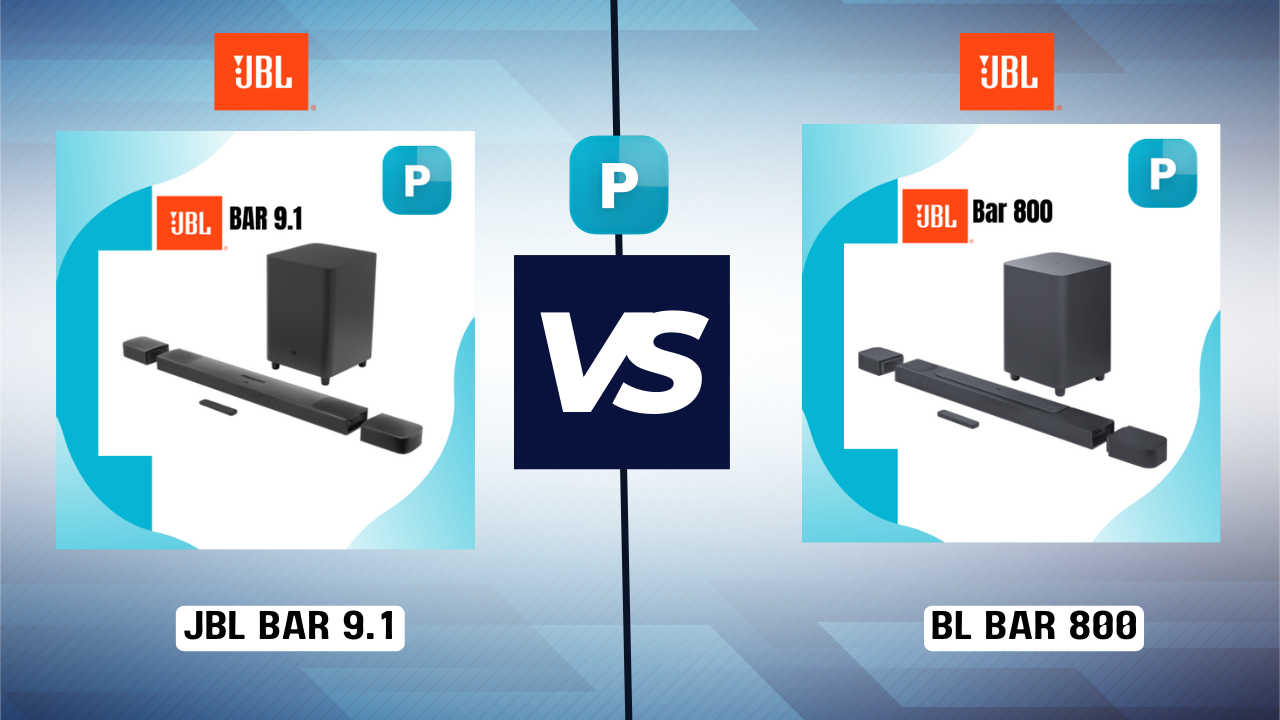
When diving into the world of home audio systems, few brands stand out like JBL for delivering immersive sound experiences. The JBL BAR 9.1 and JBL Bar 800 are two premium soundbars that promise to elevate your entertainment setup with powerful audio, wireless capabilities, and advanced features. Both models cater to users seeking cinema-like sound without the hassle of complex wiring, but they differ in power, design, and technology. This in-depth comparison explores their strengths and weaknesses to help you decide which one fits your needs best. Whether you're a movie enthusiast craving Dolby Atmos or a music lover prioritizing seamless streaming, understanding these differences is key.
Design and Build Quality
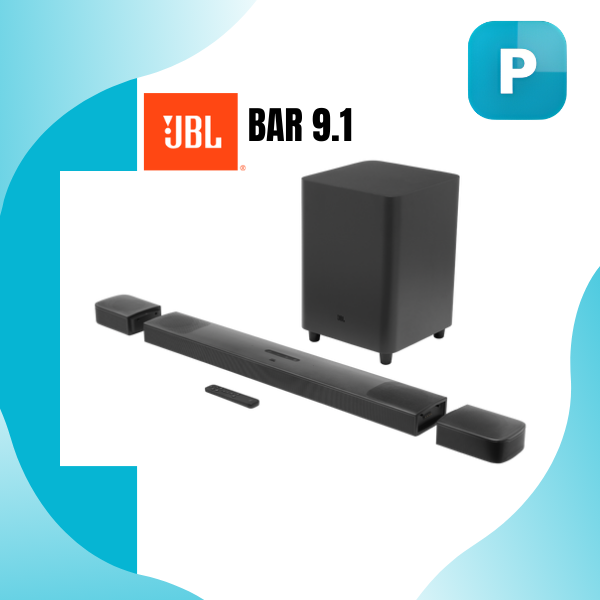
Starting with aesthetics and construction, the JBL BAR 9.1 boasts a sleek, elongated main soundbar measuring 884 × 62 × 120 mm, paired with detachable wireless surround speakers at 173 × 60 × 120 mm each and a robust 10-inch subwoofer at 305 × 440 × 305 mm. Weighing in at 3.64 kg for the soundbar, 0.72 kg per surround speaker, and 11.10 kg for the subwoofer, it feels premium and sturdy, designed for easy wall mounting or tabletop placement. The detachable speakers add flexibility, allowing you to position them as rear surrounds or even use them portably for up to 10 hours on a single charge after three hours of charging.
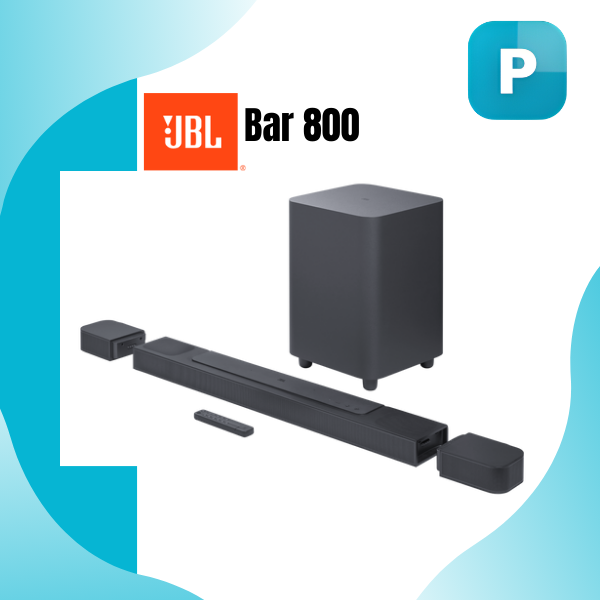
In contrast, the JBL Bar 800 features a slightly more compact main soundbar at 884 × 56 × 120 mm, with detachable surround speakers measuring 145 × 56 × 120 mm each and a similar 10-inch subwoofer at 305 × 440.4 × 305 mm. Its weights are comparable but lighter overall: 3.4 kg for the soundbar, 1.3 kg per surround speaker, and 10 kg for the subwoofer. This model emphasizes a minimalist look with its slimmer profile, making it ideal for smaller living spaces. Both soundbars operate within a 0°C to 45°C temperature range and come with wall mount brackets, but the Bar 800's surround speakers include a lithium battery (3.635V, 3283mAh), enhancing portability without specifying exact playback time.
Build-wise, the BAR 9.1 uses durable materials that resist fingerprints, while the Bar 800 incorporates a more modern finish that blends seamlessly with contemporary decor. If space is a concern, the Bar 800's marginally smaller dimensions might edge it out, but the BAR 9.1's heavier subwoofer suggests a more solid bass foundation.
Audio Performance and Technology
Audio prowess is where the JBL BAR 9.1 vs JBL Bar 800 In Depth Comparison truly shines, highlighting their capabilities in delivering immersive sound. The BAR 9.1 packs a total system power of 820W, with the main soundbar outputting 400W, surround speakers at 2 × 60W, and subwoofer at 300W. It features Dolby Atmos and DTS:X for true 3D audio, driven by four racetrack drivers, two up-firing full-range drivers, and three 0.75-inch tweeters in the soundbar. Each surround speaker includes an up-firing full-range driver and a 0.75-inch tweeter, ensuring height channels that create a bubble of sound around you.
The Bar 800, on the other hand, offers 720W total power—340W from the soundbar, 2 × 40W from surrounds, and 300W from the subwoofer. It supports Dolby Atmos 3D surround but lacks DTS:X, relying on three (46×90mm) racetrack drivers, three 0.75-inch tweeters, and two 2.75-inch up-firing drivers in the soundbar, with each surround having one (46×90mm) racetrack driver. Frequency response spans 35Hz to 20kHz, promising deep lows and crisp highs. The PureVoice Dialogue Enhancement Technology is a standout, clarifying voices in noisy scenes, which the BAR 9.1 doesn't explicitly feature.
In practical terms, the BAR 9.1's higher power translates to louder, more dynamic output, ideal for larger rooms where you want thunderous bass from its 10-inch subwoofer. Users often praise its ability to fill spaces with atmospheric effects, like rain falling from above in movies. The Bar 800, while slightly less powerful, excels in balanced sound with enhanced dialogue, making it better for TV shows or podcasts. Both handle music well, but the BAR 9.1's additional drivers provide a slight edge in separation and clarity.
Connectivity and Smart Features
Connectivity options play a crucial role in modern soundbars, and here the JBL BAR 9.1 vs JBL Bar 800 In Depth Comparison reveals thoughtful integrations for seamless use. The BAR 9.1 includes one HDMI input, one HDMI eARC with HDCP 2.3, optical input, Bluetooth 4.2 (A2DP V1.2 / AVRCP V1.5), Chromecast, AirPlay 2, and USB for MP3 playback. Wi-Fi support covers IEEE 802.11 a/b/g/n/ac on 2.4GHz/5GHz bands, enabling multi-room audio and streaming without interruptions.
The Bar 800 steps up with Bluetooth 5.0 for better range and stability, alongside Wi-Fi IEEE 802.11 a/b/g/n/ac/ax, adding ax for faster connections. It mirrors the BAR 9.1 with optical, HDMI eARC, and USB, but adds one HDMI input and output with HDR10 and Dolby Vision pass-through. Streaming is enhanced via AirPlay, Alexa Multi-Room Music, and Chromecast built-in, plus compatibility with Alexa, Google Assistant, and Siri through external devices. The JBL One App provides control over EQ settings and updates, a feature not highlighted in the BAR 9.1's specs.
For smart home enthusiasts, the Bar 800's voice assistant integration and advanced Wi-Fi make it more future-proof. Power consumption is efficient in both: the BAR 9.1 has standby under 0.5W and network standby under 6W for the soundbar, while the Bar 800's similar AC 100-240V supply ensures low energy use. If you're into casting from multiple devices, the Bar 800 might feel more intuitive.
Comparison Reviews from Users
Drawing from user experiences, the JBL BAR 9.1 vs JBL Bar 800 In Depth Comparison shows varied satisfaction levels. Many praise the BAR 9.1 for its wireless surround speakers' battery life, noting how they transform a standard TV setup into a full home theater. Reviewers often highlight the immersive Dolby Atmos effects, with one user describing it as "like being in a cinema during action scenes." However, some mention occasional Bluetooth dropouts and a bulkier subwoofer that requires more space.
Conversely, Bar 800 owners appreciate the PureVoice technology for clear dialogues, especially in dialogue-heavy films. Feedback includes compliments on its easy setup via the app and strong bass without overpowering mids. A common critique is the lower surround power, which might not satisfy in very large rooms, but it's lauded for music streaming quality. Overall, the BAR 9.1 appeals to audiophiles seeking raw power, while the Bar 800 suits casual users valuing smart features and voice clarity.