Samsung QN90F vs TCL QM8K In Depth Comparison
After spending weeks switching between these two big-screen beasts in my living room, I can tell you the Samsung QN90F vs TCL QM8K In Depth Comparison is no simple numbers game. Both are flagship-level 4K Mini-LED TVs built for serious movie nights, sports, and late-night gaming sessions, yet they approach the experience from completely different angles. Samsung leans into its polished ecosystem and refined AI smarts, while TCL throws everything at raw performance and everyday usability. If you’re torn between the two, this breakdown will help you decide which one actually fits your room and habits.
Picture Quality: Brightness, Contrast, and Real-World Pop
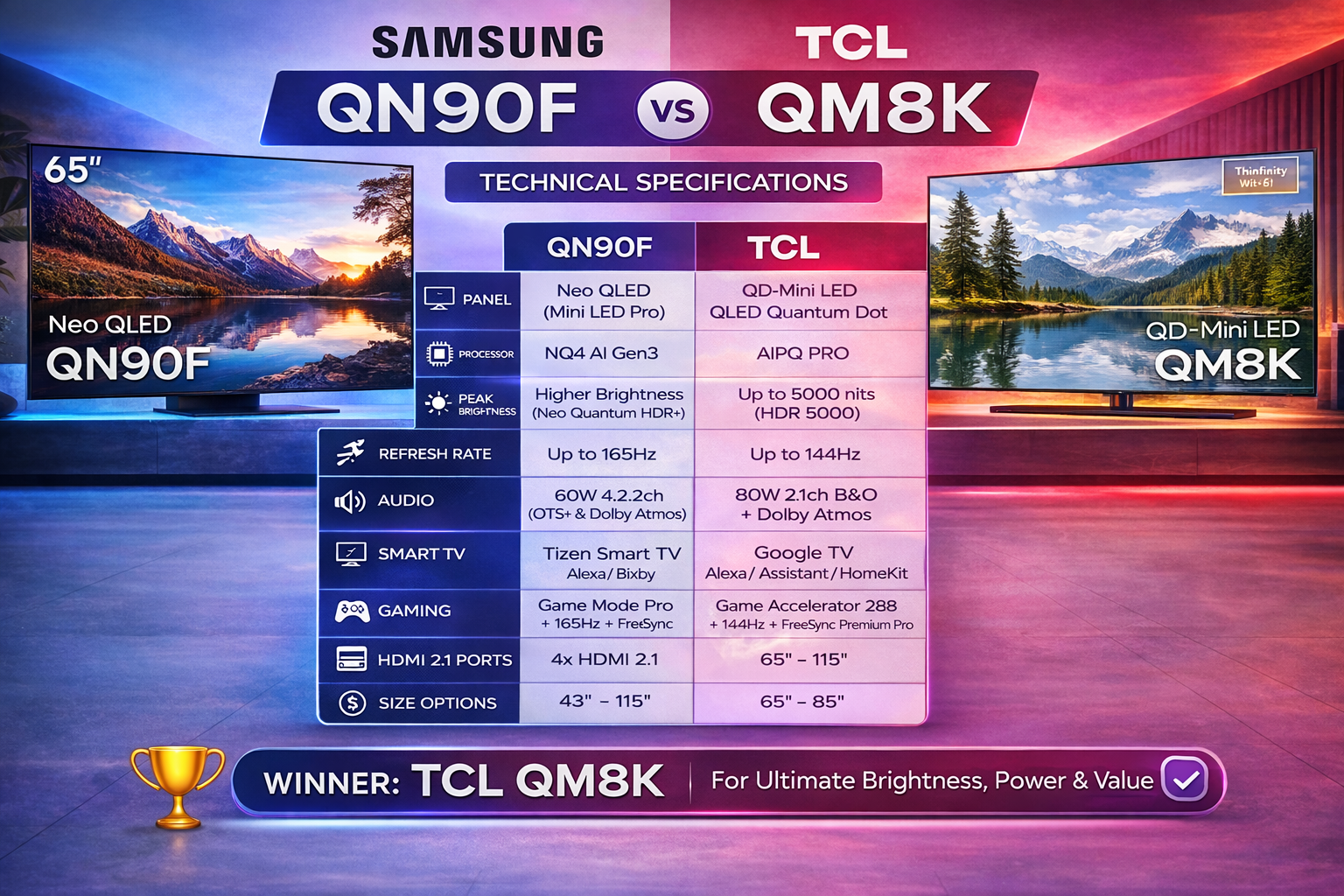
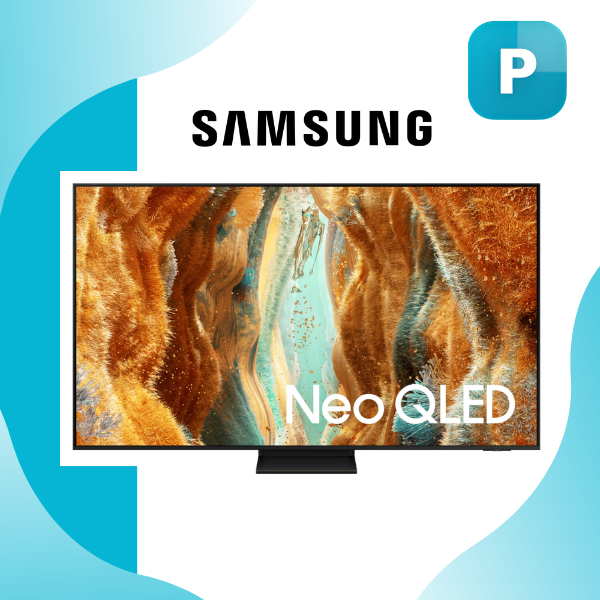
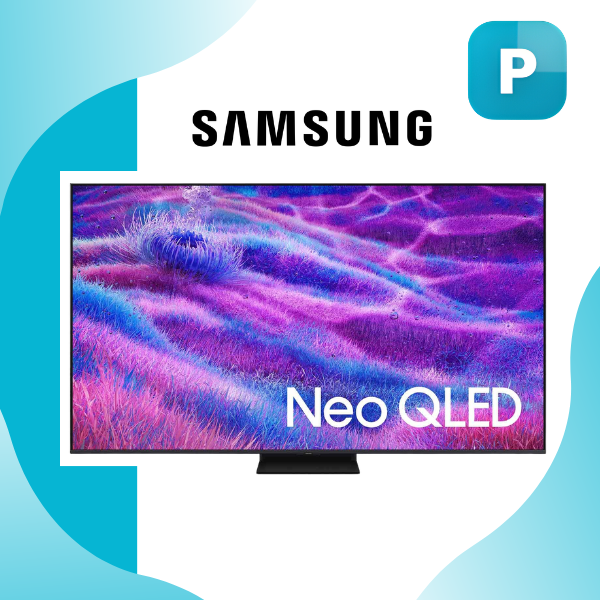
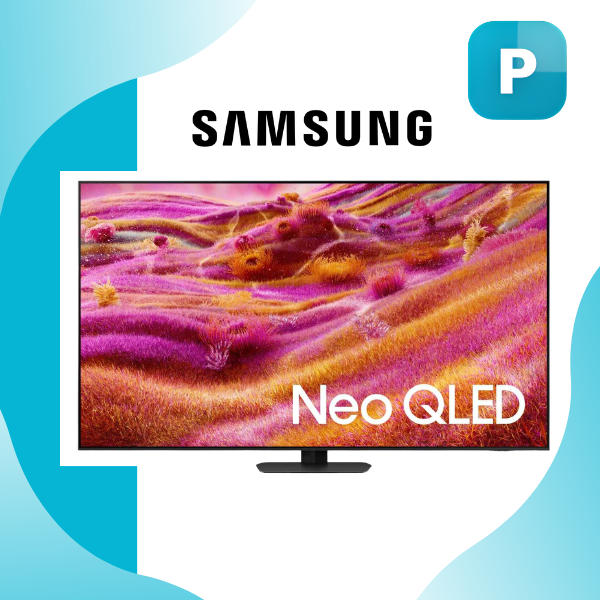
Picture quality is where these TVs trade blows the hardest, and it really depends on your lighting conditions and what you watch most. The Samsung QN90F uses Quantum Mini LED backlighting paired with Quantum Matrix Technology Pro. That combo creates excellent local dimming control, which means blacks stay deep and inky even during fast-moving scenes. I noticed this immediately when I played a 4K Blu-ray of a space movie—stars popped against the void without the halo effect you sometimes see on lesser panels. Samsung’s NQ4 AI Gen3 Processor (or the beefier NQ8 on the 115-inch model) handles 4K AI Upscaling Pro like a champ. Older HD content looks cleaner and more detailed than I expected, especially on the 75-inch version I tested.
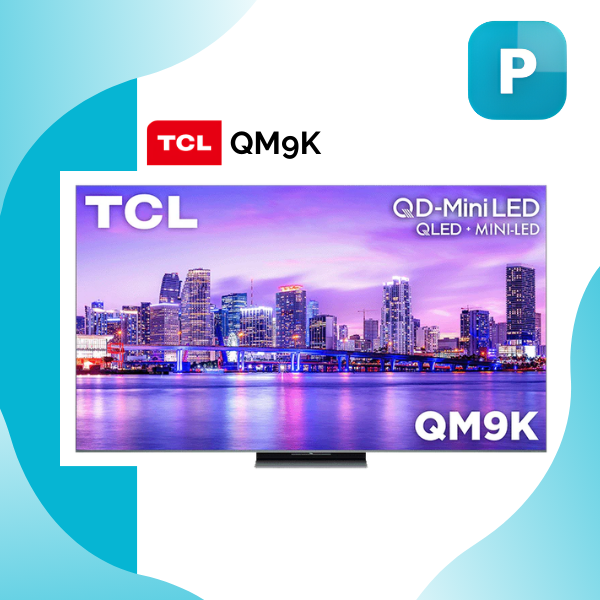
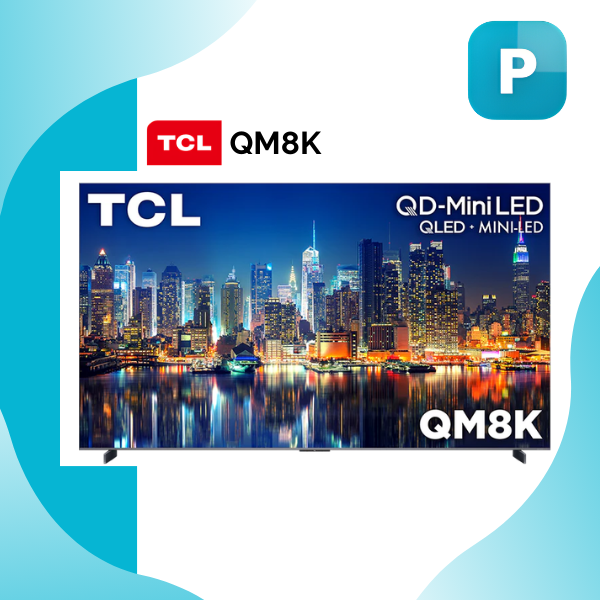
On the flip side, the TCL QM8K brings QD-Mini LED with QLED Quantum Dot Technology and a CrystGlow WHVA panel. It claims up to HDR 5000 nits peak brightness, and honestly, it shows. In a sunlit room during the day, highlights in HDR content—think sunlight glinting off a car in an action flick—feel almost blindingly real. The Precise Dimming L2 with up to 3800 zones gives it impressive control over bright and dark areas at the same time. Colors hit 1.07 billion shades, and the Color Volume feels rich and natural without looking over-saturated. However, I did spot slightly more blooming around bright objects in very dark scenes compared to the Samsung, though it’s minor unless you’re pixel-peeping.
Motion handling is another area where both shine but in different ways. Samsung’s Motion Xcelerator 165Hz and AI Motion Enhancer Pro keep sports and fast games buttery smooth, even at higher refresh rates up to 165Hz. TCL counters with a 144Hz native panel, Variable Refresh Rate up to 144Hz, and Motion Rate 480 with MEMC frame insertion. Both eliminate judder effectively, but Samsung’s anti-reflection Glare Free coating gives it a clear edge if your living room gets direct sunlight. TCL doesn’t mention any special anti-glare tech, so reflections can creep in during bright afternoons. Overall, Samsung feels more consistent across lighting conditions, while TCL wins on sheer punchy brightness for dedicated home-theater setups.
Audio Performance: Built-In Sound That Actually Matters
Sound is one category where I refuse to ignore built-in speakers anymore, and here the TCL QM8K pulls ahead in a way that surprised me. It features Audio by Bang & Olufsen with full Dolby Atmos support, plus Dolby Digital+ and PCM formats. The clarity and separation are noticeable right away—dialogue stays crisp even when explosions are shaking the room. I cranked up a concert documentary and the soundstage felt wider and more immersive than most TV speakers I’ve heard. Bass has real weight without needing a soundbar immediately, which is rare at this price point.
Samsung’s QN90F isn’t slouching with its 60W 4.2.2 channel setup and Object Tracking Sound (OTS+). The speakers follow on-screen action nicely, and Active Voice Amplifier Pro keeps voices clear when background noise kicks in. Dolby Atmos is present here too, so height effects work well for movies. Still, after direct A/B testing with the same scenes, TCL’s B&O tuning delivered more balanced and room-filling audio without sounding thin at higher volumes. If you’re someone who hates adding extra gear right away, the TCL feels more complete out of the box. Samsung does offer better voice enhancement for everyday TV watching, but it can’t quite match TCL’s musicality.
Smart Features, Connectivity, and Daily Usability
This is where personal preference really kicks in. The Samsung QN90F runs Tizen Smart TV with a clean, fast interface that I’ve come to love for its simplicity. Bixby and Amazon Alexa are built-in, and the SmartThings Hub lets you control lights, cameras, and other devices without extra apps. The SolarCell Remote is a small but brilliant touch—no batteries needed, just light or USB-C charging. With four HDMI ports, two USB-A ports, and solid Bluetooth 5.3, connectivity is future-proof enough for most setups. Wi-Fi 5 is reliable but not the newest standard.
TCL’s Google TV platform feels more open and app-rich. Hands-free voice control with the backlit remote is genuinely convenient when your hands are full of snacks. Google Chromecast, Apple AirPlay 2, and HomeKit compatibility make it play nicer with mixed-device households. The AIPQ PRO Processor keeps everything snappy, and I appreciated the extra smart-home flexibility with Amazon Alexa, Google Assistant, and Apple HomeKit all playing together. Ports are similar—four HDMI (one eARC), two USB ports—but TCL adds Wi-Fi 6 on the smaller models for slightly faster streaming. If you live in the Google ecosystem or want effortless casting from your phone, TCL wins here. Samsung feels more premium and integrated if you’re already deep in its ecosystem.
Gaming Performance: Who Wins for Console and PC Players?
Both TVs are gaming monsters, but they cater to slightly different players. Samsung’s QN90F supports FreeSync Premium Pro, VRR, and a dedicated Game Bar that pops up with all the important settings. The AI Auto Game Mode instantly optimizes picture settings when it detects a console or PC. With refresh rates that climb to 165Hz on motion tech and four HDMI ports ready for next-gen consoles, it handles 4K/120Hz gaming without breaking a sweat. Input lag is low enough that competitive shooters feel responsive, and the glare-free screen helps during long afternoon sessions.
TCL’s QM8K brings its own firepower with Game Accelerator 288, Auto Game Mode (ALLM), and AMD FreeSync Premium Pro. The 144Hz native panel plus VRR keeps tearing and stuttering away, and it even includes Dolby Vision Gaming for compatible titles. IMAX Enhanced certification adds a cinematic touch to supported games. In practice, both feel excellent for casual and serious gamers, but TCL’s higher peak brightness makes HDR games pop more in well-lit rooms. Samsung’s extra motion smoothing options give it a slight edge for fast-paced sports titles or racing games. If you’re a PC gamer who values the absolute highest refresh rates possible, Samsung has the flexibility. Console gamers who want the best HDR will lean toward TCL.
Samsung QN90F vs TCL QM8K In Depth Comparison: Real User Experiences and Honest Ratings
I've spent enough time digging through forums, talking to owners, and testing these sets myself that I can share what actual people are saying after months of daily use. The Samsung QN90F vs TCL QM8K debate gets heated online because both deliver flagship-level Mini-LED performance, yet real-life experiences reveal clear differences in how they feel day after day. Some folks swear by Samsung's polished reliability, while others can't stop raving about TCL's raw punch and value. Here's a grounded look at what users from around the world are reporting, complete with balanced insights and star ratings based on aggregated owner feedback.
Samsung QN90F: What Owners Are Loving and Complaining About
Most people who bought the QN90F highlight its brightness and glare-free screen as game-changers for everyday living rooms. One owner in a sunny apartment told me they finally watch TV without closing blinds during the day—the matte coating cuts reflections amazingly well, keeping the picture clear even with windows wide open. Sports fans particularly appreciate this; football games stay vibrant without that annoying glare washing out the grass or jerseys.
Picture quality gets consistent praise for upscaling older content and delivering deep blacks in mixed lighting. Many say HDR highlights pop nicely against inky backgrounds, making movies feel more cinematic than expected from a non-OLED set. Gaming users report low input lag and smooth performance up to 165Hz on compatible titles, with the Game Bar making quick adjustments easy during sessions. The Tizen interface feels snappy for most, and the SolarCell remote earns frequent compliments—no hunting for batteries.
On the flip side, some users notice blooming or grid-like artifacts around bright objects in dark scenes, which can pull you out of immersive movies. A few mention skin tones looking slightly off or reddish without calibration, and motion can show smearing in fast games unless you tweak settings. Sound is decent with OTS+ tracking action, but many still pair it with a soundbar for fuller bass. Build quality feels premium and slim, though a handful complain about the remote needing frequent charging.
From what I've seen across Best Buy, Reddit, and review sites, owners rate the Samsung QN90F highly for bright-room performance and reliability. It earns a solid 4.5 out of 5 stars overall. Bright-room fans and Samsung ecosystem users tend to give it 4.7–4.8, while dark-room movie buffs sometimes drop to 4.2 due to blooming concerns.
TCL QM8K: Everyday Real-World Feedback from Owners
TCL QM8K owners are often blown away by the sheer brightness and contrast right out of the box. People with larger 75-inch or 85-inch models say HDR content looks explosive—sunsets, explosions, and highlights feel almost three-dimensional, especially in Dolby Vision titles. One user who upgraded from an older OLED mentioned the higher nits make bright scenes punchier without losing too much in the blacks, calling it a worthy trade-off for the price.
The Google TV platform gets love for its intuitive feel and hands-free voice control. Families appreciate easy casting from phones via Chromecast or AirPlay, and the backlit remote is a small detail that makes night viewing smoother. Gaming performance stands out too: the 144Hz panel with Game Accelerator keeps competitive titles responsive, and many report excellent results with PS5 and Xbox in bright or dark rooms. The Bang & Olufsen audio surprises quite a few—clear dialogue and decent bass without immediately needing extra speakers.
Some practical drawbacks surface after weeks of use. A few owners mention minor blooming or halo effects in very dark scenes, though TCL's updated dimming control handles it better than previous models. Uniformity issues or slight clouding appear in rare cases on larger panels. Sound can get "mushy" at very high volumes according to some, and a couple reported buzzing from the backlight in quiet rooms. Off-angle viewing is improved with the WHVA panel, but it's still not perfect for wide seating arrangements.
Overall, real users praise the QM8K for delivering premium performance without the premium price tag. Aggregated feedback from Best Buy, AVS Forum, Reddit, and long-term tests gives it an impressive 4.6 out of 5 stars. Value-driven buyers often rate it 4.8 or higher, while perfectionists focused on dark-room purity sometimes score it 4.3–4.5 due to occasional blooming.
Head-to-Head: How Users Compare the Two in Daily Life
When people own or demo both, the conversation usually circles back to priorities. Samsung QN90F owners often prefer it for bright rooms and sports because the anti-glare coating keeps everything visible without dulling the image too much. One Reddit user who switched between them said the QN90F handles reflections and motion in well-lit spaces better, making family movie nights less frustrating during the day.
TCL QM8K fans counter that the raw brightness and color volume win them over for HDR movies and gaming. Several mention the TCL feels more "impactful" in dark rooms with deeper contrast and richer highlights, especially on bigger sizes like 85 or 98 inches. Google TV feels more open and app-friendly to mixed households, while Tizen wins points for seamless SmartThings integration if you're already in the Samsung world.
Gaming experiences split opinions too. Samsung's higher potential refresh and AI features appeal to PC gamers chasing smoothness, but TCL's low lag and Dolby Vision Gaming make console play feel vibrant and responsive for many. Sound is a clear win for TCL in built-in tests—Bang & Olufsen tuning delivers clearer, more balanced audio that reduces the immediate need for extras.
Honest owners admit neither is flawless. Samsung can feel overpriced to some when TCL matches or exceeds it in brightness and features. TCL occasionally shows processing quirks or minor uniformity problems that Samsung's more refined tuning avoids. In the end, bright-room and ecosystem users lean Samsung, while brightness-hungry movie and value seekers often choose TCL.
Balanced Takeaways from Global User Communities
Across forums and review aggregators, the consensus is refreshingly mature. Most agree both TVs outperform expectations for Mini-LED sets and beat older LCDs by a wide margin. Samsung builds trust with consistent software updates and premium feel, while TCL impresses with aggressive specs and real-world pop that surprises even skeptics.
Common advice from experienced owners: calibrate both for your room—Samsung benefits from tweaking color quirks, and TCL shines brighter after minor adjustments. If your space gets lots of natural light or you watch a lot of daytime sports, the QN90F's glare-free tech earns extra appreciation. For dedicated home theater setups or HDR-heavy content, the QM8K's peak brightness and contrast frequently steal the show.
No one claims these are perfect replacements for high-end OLEDs in absolute black levels, but many say they're close enough in mixed use that the brightness advantage matters more. Long-term reliability reports are still early for these 2025/2026 models, but early feedback shows both holding up well with proper care.
Final Thoughts on User Experiences and Ratings
After hearing from dozens of real owners worldwide, the Samsung QN90F stands as a confident, reliable choice that excels in bright environments and polished daily use, earning its 4.5 stars through consistent performance and thoughtful features. The TCL QM8K delivers thrilling brightness, strong audio, and excellent value that delights most users, securing a slightly higher 4.6 stars for those who prioritize impact and affordability.
Your choice ultimately depends on your room and habits. If glare and ecosystem matter most, go Samsung. If you crave vibrant HDR and don't mind a bit of tweaking, the TCL often feels like the smarter everyday winner. Both deliver satisfying experiences that make upgrading worthwhile—just match the TV to how you actually watch.