TV & Smart TV

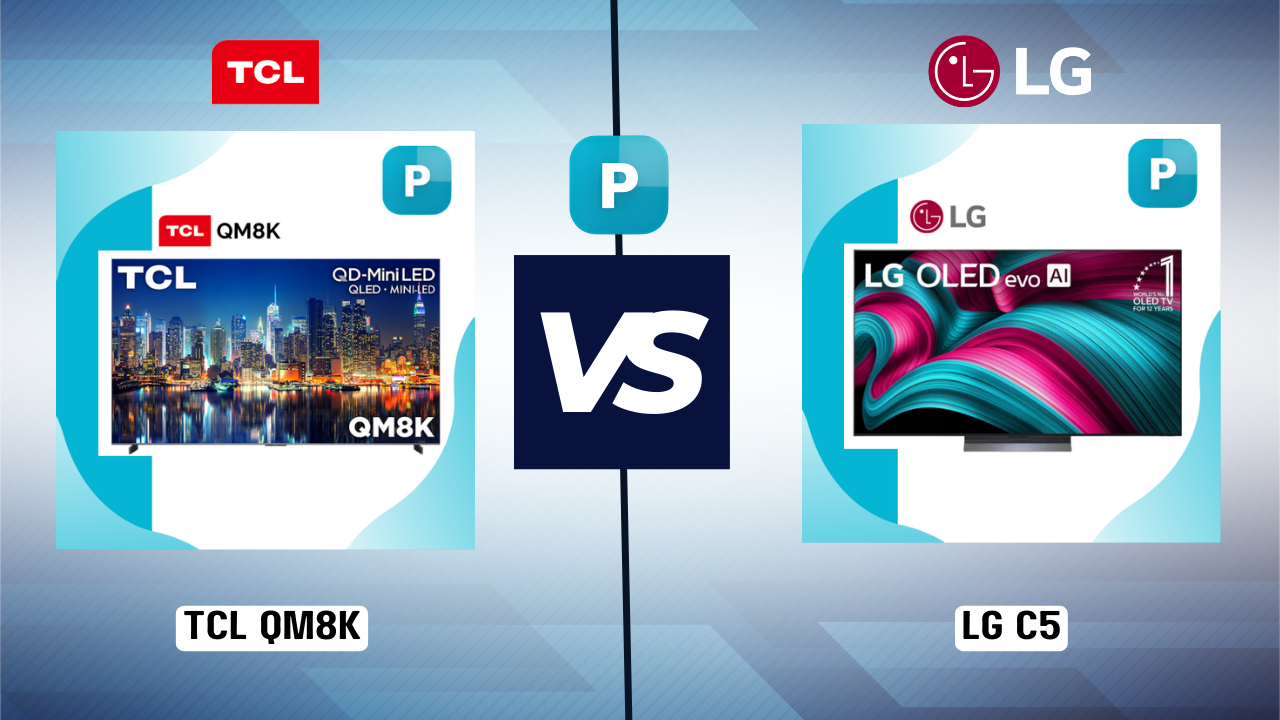
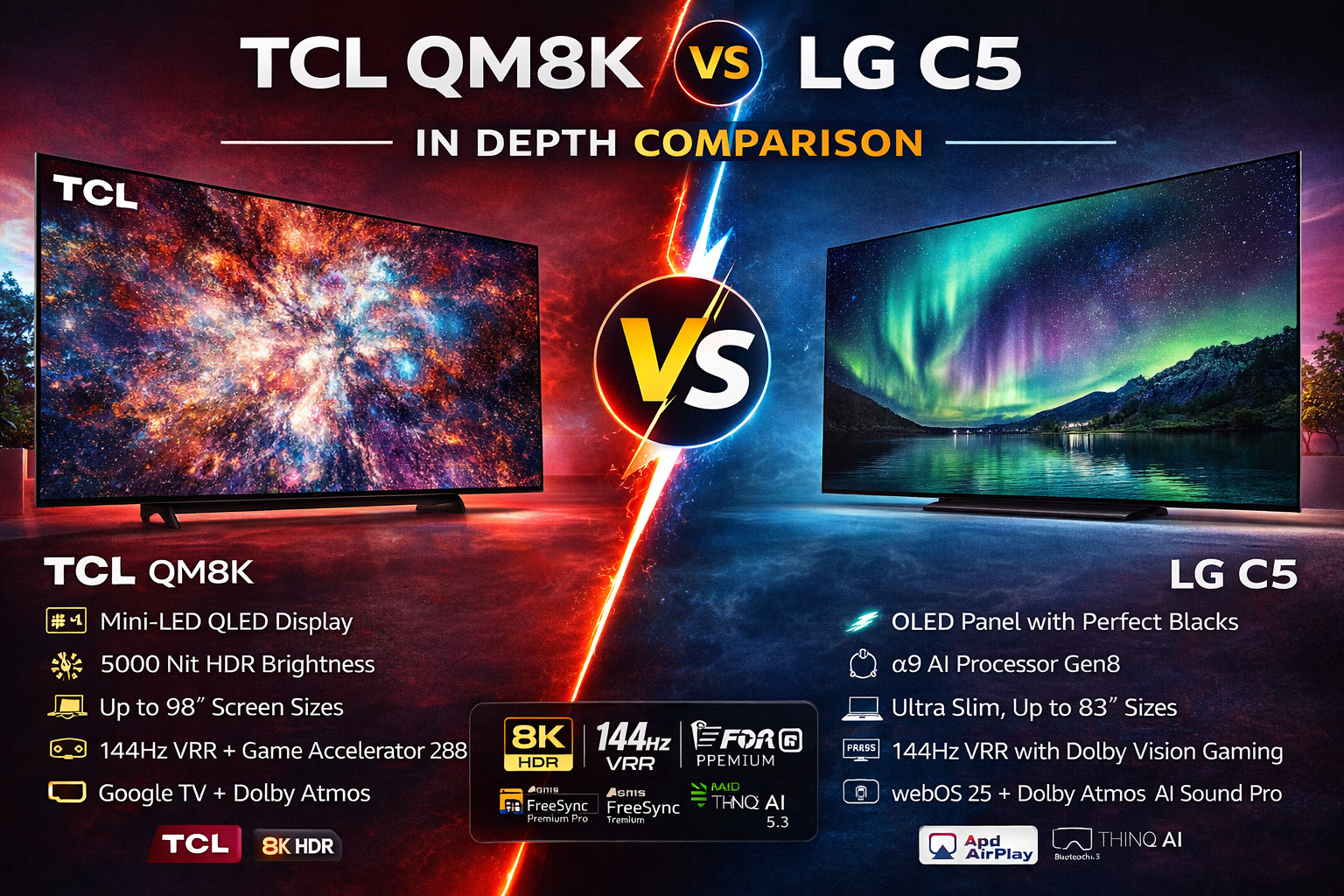
TCL QM8K vs LG C5 In Depth Comparison

4 views March 18, 2026 Last updated: Mar 18, 2026 9 min read
Login to Save

Detailed Comparison

SpecificationTCL QM8KLG C5
Display TechnologyQD-Mini LED (QLED)OLED (Self-emissive)
Resolution4K UHD4K UHD
Peak BrightnessUp to 5000 nitsLower than TCL, enhanced with Brightness Booster
ContrastHigh contrast with up to 3800 dimming zonesInfinite contrast (perfect blacks)
Color Support1.07 billion colors (Quantum Dot)Accurate and natural OLED color reproduction
HDR SupportDolby Vision IQ, HDR10+, HLGDolby Vision, HDR10, HLG
ProcessorAIPQ PRO Processorα9 AI Processor Gen8
Refresh Rate144Hz native120Hz native (up to 144Hz VRR)
Motion TechnologyMotion Rate 480 with MEMCAI Motion Processing
Response TimeSlower than OLED< 0.1ms
Gaming FeaturesVRR, ALLM, FreeSync Premium Pro, Dolby Vision GamingVRR, ALLM, NVIDIA G-Sync, FreeSync Premium, HGIG
HDMI Ports4 (1 eARC)4 HDMI 2.1
Operating SystemGoogle TVwebOS 25
Voice AssistantsGoogle Assistant, Alexa, Apple HomeKitAlexa, Google Assistant, ThinQ AI
Wireless ConnectivityWi-Fi 6, BluetoothWi-Fi 6E, Bluetooth 5.3
Audio SystemBang & Olufsen tuned speakers, Dolby Atmos2.2 channel, AI Sound Pro, Dolby Atmos
Design ThicknessSlim but thicker than OLEDUltra-thin (~1.8 inches)
WeightHeavier due to backlight systemLighter (e.g., 65" ~36.6 lbs)
Size OptionsUp to 98 inchesUp to 83 inches
Power ConsumptionHigher due to brightness~163.9W typical (more efficient)
MountingVESA 300x300 to 600x500Wall mount supported
Best ForBright rooms, large screens, HDR impactDark rooms, cinematic viewing, gaming precision

Full Technical Specifications

Feature TCL QM8K Series QD-Mini LED TV Reviews Specifications LG C5 4K Smart TV Review Specifications
Audio Features - AI Sound Pro (Virtual 11.1.2), Clear Voice Pro, WOW Orchestra
Audio Formats Dolby Atmos, Dolby Digital+, Dolby Digital, PCM -
Audio Output - Optical (SPDIF)
Audio System Audio by Bang &amp; Olufsen 2.2 Channel Speaker System
Available Sizes 65", 75", 85", 98" -
Bluetooth Bluetooth Personal Audio -
Brightness Up to HDR 5000 Nits -
Brightness Technology - Brightness Booster
Casting / Screen Mirroring Google Chromecast Built-in, Apple AirPlay 2 -
Connectivity - Wi-Fi 6E, Bluetooth 5.3, Ethernet
Country of Origin - Mexico
Design Ultra Slim Design -
Dimensions (With Stand) - 56.7" x 34.6" x 9.1"
Dimensions (Without Stand) - 56.7" x 32.5" x 1.8"
Display Colors 1.07 Billion Colors -
Display Technology QD-Mini LED with QLED Quantum Dot Technology -
Display Type - 4K OLED
Dolby Features - Dolby Vision &amp; Dolby Atmos
Ethernet 1 Port -
Game Features Game Accelerator 288, Auto Game Mode (ALLM), AMD FreeSync Premium Pro -
Gaming &amp; Cinema Modes Filmmaker Mode, IMAX Enhanced Certification -
Gaming Features - VRR, ALLM, NVIDIA G-Sync, AMD FreeSync Premium, HGIG
HDMI Ports 4 HDMI (1 with eARC) 4 HDMI 2.1 (4K 120Hz, eARC, VRR, ALLM)
HDR Support Dolby Vision IQ, Dolby Vision Gaming, HDR10+, HDR10, HLG Dolby Vision, HDR10, HLG
Included Accessories - Magic Remote MR25, Power Cable, Stand, Batteries, Quick Start Guide
Local Dimming Precise Dimming L2 (Up to LD3800 Zones) -
Model - LG C5 (OLEDC5 Series)
Motion Technology Motion Rate 480 with MEMC Frame Insertion -
Operating System - webOS 25
Optical Audio Output 1 SPDIF Digital Optical -
Panel Type CrystGlow WHVA Panel -
Picture Features - AI Picture Pro, AI Super Upscaling 4K, Dynamic Tone Mapping Pro, Filmmaker Mode
Power Consumption - 163.9W (Typical), 302 kWh/year
Processor TCL AIPQ PRO Processor α9 AI Processor 4K Gen8
RF Input 1 (NTSC / ATSC / ATSC 3.0 NextGen TV) -
Refresh Rate 144Hz Native Refresh Rate 120Hz Native (VRR up to 144Hz)
Resolution 4K Ultra HD (3840 × 2160) 4K Ultra HD (3840 x 2160)
Response Time - Less than 0.1ms
Screen Size - 65 Inch (Also available in 42", 55", 77", 83")
Series QM8K Series QD-Mini LED QLED 4K UHD Smart TV -
Smart Features - Alexa Built-in, Google Assistant, Apple AirPlay 2, ThinQ AI, Magic Remote
Smart Home Compatibility Amazon Alexa, Google Assistant, Apple HomeKit -
Smart TV Platform Google TV -
Standby Power - Less than 0.5W
Streaming Apps - Netflix, Disney+, YouTube, Prime Video, Apple TV, ESPN, Sling TV and more
USB Ports 1 × USB 3.0, 1 × USB 2.0 3 x USB 2.0
VESA Mount 65": 300 × 300 / 98": 600 × 500 300 x 200 mm
Variable Refresh Rate Up to 144Hz VRR -
Voice Control Hands-Free Voice Control with Backlit Voice Remote -
Warranty 1 Year Limited Warranty 1 Year Limited Warranty (Parts &amp; Labor)
Weight (With Stand) - 40.8 lbs
Weight (Without Stand) - 36.6 lbs
Wi-Fi Wi-Fi 6 (65” Model) / Wi-Fi 5 (98” Model) -

Comparison Overview

TCL QM8K vs LG C5 In Depth Comparison

When diving into premium 4K TVs, few matchups generate as much excitement as this one. The TCL QM8K brings massive Mini LED power with extreme brightness, while the LG C5 delivers classic OLED perfection with lightning-fast response. In this detailed breakdown, every aspect gets unpacked so you can see exactly how these two flagship models stack up for movies, sports, gaming, and daily viewing. From panel tech to real-world usability, the differences matter more than ever in 2026. If you want pure HDR punch in a sunlit living room or cinematic blacks that disappear into the night, this guide leaves no stone unturned.

Build Quality and Design Differences

Start with how these TVs feel in your space, because first impressions last. The TCL QM8K uses an ultra-slim profile that still houses its advanced backlight system without looking bulky. Its CrystGlow WHVA panel sits behind a clean bezel, and the overall footprint stays surprisingly manageable even in the 85-inch and 98-inch versions. VESA mounts are generous—300x300 for smaller sizes and 600x500 for the biggest—making wall installation straightforward. The stand is sturdy yet minimal, so the TV sits low and stable on any media console.

Switch to the LG C5 and the design language shifts dramatically. At just 1.8 inches thick without the stand, this OLED panel practically vanishes when mounted. The 65-inch model weighs only 36.6 lbs without stand, making it far easier to handle during setup than heavier Mini LED sets. Its stand is a sleek central pedestal that keeps the screen floating elegantly, and the included Magic Remote feels like a premium accessory right out of the box. Dimensions with stand come to 56.7 by 34.6 by 9.1 inches, giving it a low center of gravity that resists tipping.

What really separates them is everyday practicality. TCL offers more size choices, stretching all the way to 98 inches for true home-theater enthusiasts who want cinema scale. LG sticks to a tighter range up to 83 inches but compensates with Mexico-sourced build quality and a 1.8-inch depth that beats almost every Mini LED rival. Both carry one-year limited warranties, yet the LG’s thinner chassis runs cooler—typical power draw sits at 163.9 watts versus the TCL’s higher consumption from its aggressive backlight. For apartments or minimalist rooms, the LG C5’s feather-light profile wins; for massive living rooms craving presence, the TCL QM8K’s size flexibility feels unbeatable.

Visual Excellence: Brightness, Contrast, and Color Accuracy

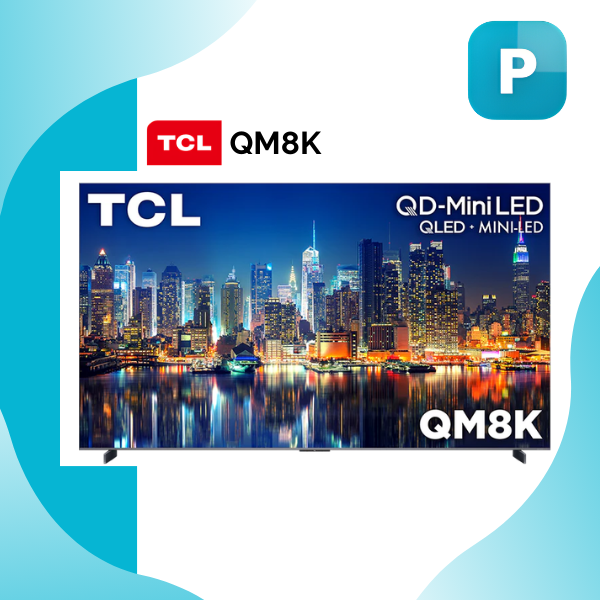
Picture performance is where these TVs trade blows in fascinating ways. The TCL QM8K relies on QD-Mini LED with QLED quantum dots and up to 3800 local dimming zones. That combination pushes peak brightness all the way to 5000 nits in HDR content. Scenes like desert explosions in Dune or sunlight streaming through windows in The Revenant explode with intensity that makes the room feel brighter. The 1.07 billion color palette renders skin tones, foliage, and metallic surfaces with vivid accuracy, while the AIPQ PRO processor handles upscaling from lower resolutions smoothly. Motion Rate 480 with MEMC keeps fast action crisp—no soap-opera effect unless you want it.

Contrast on the TCL is impressive thanks to those thousands of dimming zones, yet faint blooming can appear around bright objects against dark backgrounds if you sit off-angle. The CrystGlow panel helps widen the viewing sweet spot, but it cannot match true per-pixel control. HDR formats are fully covered: Dolby Vision IQ, HDR10+, and HLG all look spectacular, especially when the TV senses ambient light and adjusts automatically.

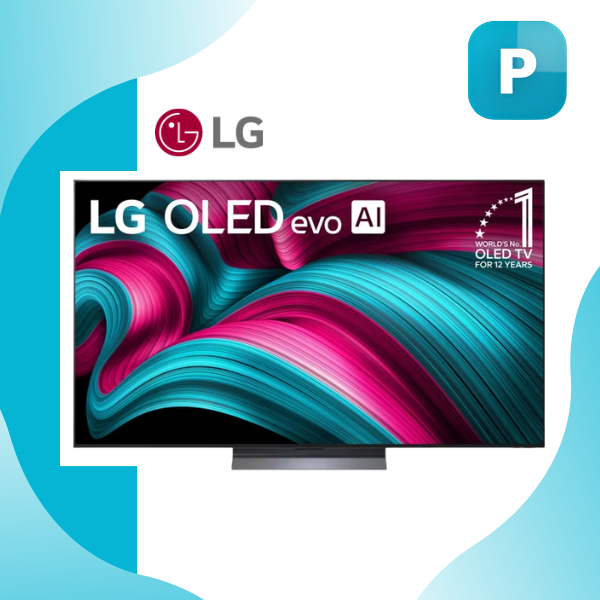
Now the LG C5 flips the script completely. Its 4K OLED panel lights each pixel individually, delivering infinite contrast and perfect blacks that make night scenes in The Batman feel bottomless. No haloing, no blooming—ever. The Brightness Booster technology lifts highlights enough to compete in moderately lit rooms, while the α9 AI Processor Gen8 fine-tunes every frame using deep learning. Dynamic Tone Mapping Pro optimizes HDR scene by scene, and AI Super Upscaling 4K breathes new life into older streaming content. Colors pop with natural saturation, and the 120Hz native refresh (extendable to 144Hz via VRR) keeps motion silky whether you watch soccer or slow cinematic pans.

Response time under 0.1ms on the LG eliminates any hint of blur, something the TCL cannot claim despite its higher native refresh rate. For dark-room movie nights, the LG C5’s self-emissive technology creates an emotional connection that Mini LED panels rarely match. Yet walk into a bright living room during daylight and the TCL’s 5000-nit ceiling pulls ahead, rendering highlights that OLEDs simply cannot reach without risking burn-in over years of use. Both support Filmmaker Mode and IMAX Enhanced on the TCL side, so color purists get accurate presets either way. The real choice comes down to your lighting conditions: extreme brightness and size favor the TCL QM8K, while reference-level contrast and motion purity tilt toward the LG C5.

Gaming Prowess: Which TV Wins for Gamers?

Serious gamers will scrutinize these specs closely because input lag and sync features decide who stays competitive. The TCL QM8K arrives armed with a native 144Hz panel, full VRR up to 144Hz, and its Game Accelerator 288 feature that essentially doubles perceived frame rates in supported titles. Auto Low Latency Mode kicks in instantly, AMD FreeSync Premium Pro eliminates tearing, and Dolby Vision Gaming adds HDR depth during play. Four HDMI ports (one eARC) accept the latest consoles and PCs at full bandwidth. The backlit remote even doubles as a quick game controller shortcut, and the Google TV interface lets you launch cloud games without switching inputs.

Yet the LG C5 counters with advantages that hardcore players notice immediately. Its response time below 0.1ms feels instantaneous, NVIDIA G-Sync compatibility joins AMD FreeSync Premium and HGIG for flawless variable refresh across every major platform. VRR stretches to 144Hz despite the 120Hz native panel, and four full HDMI 2.1 ports support 4K at 120Hz simultaneously. The α9 processor applies AI Picture Pro in real time, sharpening textures without adding lag. ALLM and the Magic Remote’s pointer system make menu navigation during multiplayer sessions effortless.

Both TVs handle 4K/120Hz gaming beautifully, but subtle differences emerge in long sessions. The TCL’s higher sustained brightness keeps HDR effects vivid even in well-lit gaming dens, while the LG’s perfect blacks make shadows and stealth sections pop with realism. Burn-in risk on the LG exists if you leave static HUDs on for thousands of hours, though 2025 OLED mitigation is excellent. The TCL sidesteps that worry entirely thanks to its backlight design. For PC gamers chasing 144Hz G-Sync, the LG C5 edges ahead; console owners wanting maximum size and brightness may lean toward the bigger TCL QM8K screens. Either way, both destroy last-generation TVs in responsiveness and features.

Smart Platform, Audio Experience, and Daily Usability

Daily operation separates good TVs from great ones, and here both brands shine yet serve different tastes. The TCL QM8K runs Google TV, giving you a clean, recommendation-heavy interface packed with Chromecast built-in and Apple AirPlay 2. Hands-free voice control works through the backlit remote or built-in mics, while Amazon Alexa and Apple HomeKit integration turn the TV into a smart-home hub. Wi-Fi 6 on most sizes ensures smooth 4K streaming, and Bluetooth routes personal audio to headphones without disturbing the room. Streaming apps load fast thanks to the AIPQ PRO chip.

Flip to the LG C5 and webOS 25 greets you with a more intuitive Magic Remote that feels like a laser pointer. ThinQ AI, built-in Alexa and Google Assistant, plus AirPlay 2 cover all voice and casting bases. The 2.2-channel speakers paired with AI Sound Pro create a virtual 11.1.2 surround experience that impresses even without a soundbar. WOW Orchestra syncs perfectly if you add compatible LG audio gear. Connectivity includes Wi-Fi 6E and Bluetooth 5.3 for rock-solid wireless performance.

Audio hardware tells another story. TCL partners with Bang & Olufsen for tuned drivers that deliver clear dialogue and powerful bass straight from the TV. Dolby Atmos support on both models adds height effects, but the LG’s AI processing simulates wider soundstages in smaller rooms. Power consumption favors the LG at 163.9 watts typical, while the TCL runs hotter under bright HDR loads. For families who cast content all day, Google TV’s ecosystem feels more open; for users who love gesture navigation and virtual surround without extra speakers, webOS on the LG C5 wins. Both include multiple USB ports and optical output, so expanding the setup remains painless.
Final Verdict

Choosing Between TCL QM8K and LG C5

After weighing every specification and real-world scenario, the TCL QM8K vs LG C5 In Depth Comparison reveals two exceptional TVs serving different priorities. Choose the TCL QM8K if you crave eye-searing brightness up to 5000 nits, gigantic screen sizes up to 98 inches, and bulletproof performance in bright living rooms. Its Mini LED zones and 144Hz native refresh deliver HDR that punches through daylight while keeping gaming smooth and Google TV effortless.

Pick the LG C5 when perfect blacks, sub-0.1ms response, and cinematic depth matter most. The OLED panel’s infinite contrast and AI-driven processing create movie nights that feel immersive, and its gaming suite with G-Sync makes it the preferred choice for competitive players. Thinner design and lower power draw add everyday appeal.

In this TCL QM8K vs LG C5 In Depth Comparison, there is no universal winner—only the right tool for your room and habits. Bright spaces and blockbuster scale point to TCL; dark theaters and precision gaming favor LG. Either investment will satisfy for years, but match the panel tech to your lighting and content habits and you will never look back.

Community Choice

Which one would you choose?

0%
0%

User Feedback

Leave a comment

Recent Feedback (0)

No feedback yet

Be the first to share your thoughts!

Frequently Asked Questions

Q: TCL QM8K vs LG C5, which TV is brighter for HDR content?

A: The TCL QM8K is significantly brighter, with a peak brightness of up to 5000 nits, making it the superior choice for watching HDR content in sunlit living rooms, whereas the LG C5 relies on Brightness Booster technology for moderate highlights.

Q: Which TV has better black levels and contrast for dark room viewing?

A: The LG C5 has perfect black levels and infinite contrast due to its self-emissive OLED panel that lights each pixel individually, eliminating blooming entirely, while the TCL QM8K, despite thousands of dimming zones, may show faint blooming in dark scenes.

Q: Which TV is better for competitive gaming with PC and consoles?

A: The LG C5 is better for competitive gaming due to its sub-0.1ms response time, NVIDIA G-Sync compatibility, and flawless VRR up to 144Hz, while the TCL QM8K offers a strong alternative with its native 144Hz panel and AMD FreeSync Premium Pro.

Q: TCL QM8K vs LG C5, which one has better motion handling for sports?

A: Both handle motion excellently, but the LG C5's 0.1ms response time eliminates motion blur entirely for fast sports, while the TCL QM8K relies on its Motion Rate 480 with MEMC to keep action crisp and smooth.

Q: Which TV offers larger screen sizes for a home theater setup?

A: The TCL QM8K offers larger screen sizes, stretching all the way up to 98 inches, making it the winner for buyers who want a true cinema-scale experience, whereas the LG C5 maxes out at 83 inches.

Q: Which TV has better color accuracy and volume out of the box?

A: The TCL QM8K features QD-Mini LED with quantum dots to deliver a 1.07 billion color palette with vivid saturation, while the LG C5 offers more natural, accurate colors with its α9 AI Processor Gen8, making both excellent but suited to different preferences.

Q: Which TV is thinner and easier to mount on a wall?

A: The LG C5 is significantly thinner and easier to wall-mount at just 1.8 inches deep and weighing only 36.6 lbs (65-inch model), virtually disappearing when mounted, while the TCL QM8K requires more space due to its Mini LED backlight system.

Q: TCL QM8K vs LG C5, which smart TV platform is more user-friendly?

A: The LG C5 features webOS 25 with the Magic Remote pointer system for intuitive navigation, while the TCL QM8K runs Google TV with a recommendation-heavy interface and hands-free voice control, so the choice depends on whether you prefer gesture control or an open ecosystem.

Q: Which TV has better built-in sound quality without a soundbar?

A: The LG C5 has better built-in sound with its 2.2-channel speakers and AI Sound Pro that creates virtual 11.1.2 surround sound, while the TCL QM8K counters with Bang & Olufsen tuned drivers for clear dialogue and powerful bass.

Q: Which TV is better for a brightly lit room with lots of windows?

A: The TCL QM8K is better for brightly lit rooms because its 5000-nit peak brightness cuts through glare and reflections easily, whereas the LG C5's OLED panel is optimized for controlled lighting and performs best in darker environments.