TV & Smart TV

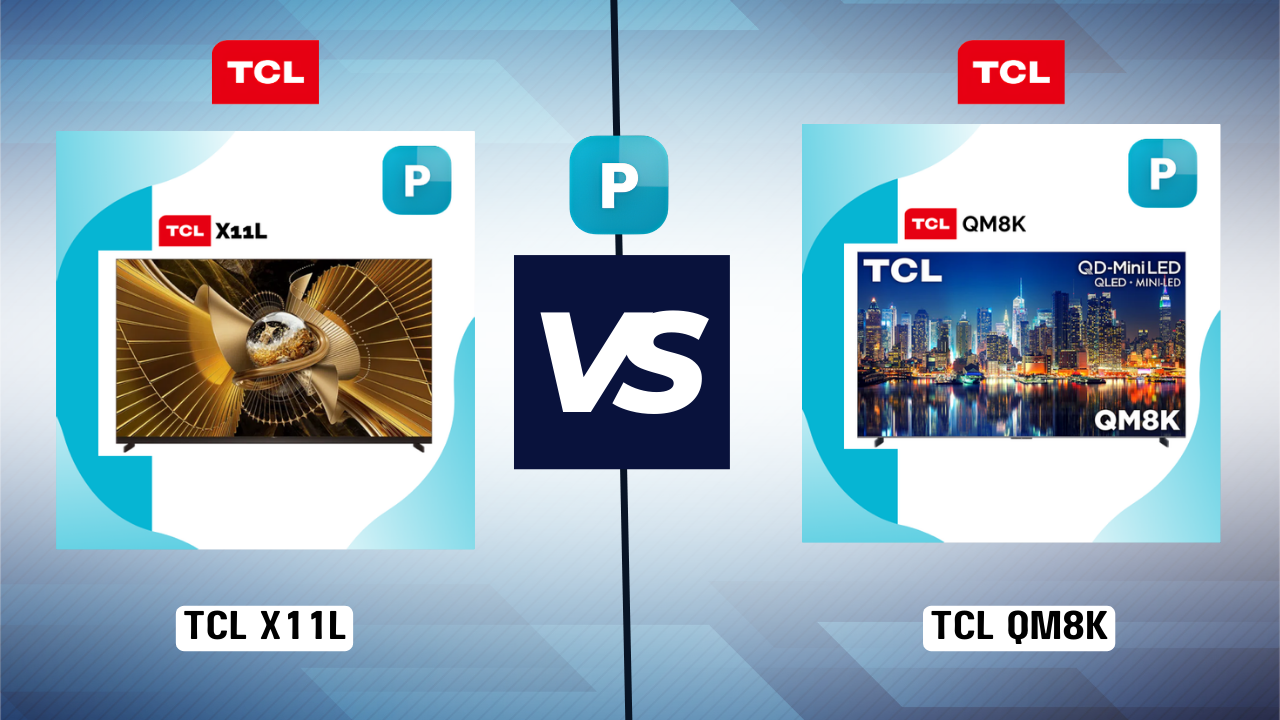
TCL X11L vs TCL QM8K In Depth Comparison

13 views March 14, 2026 Last updated: Mar 15, 2026 7 min read
Login to Save

Detailed Comparison

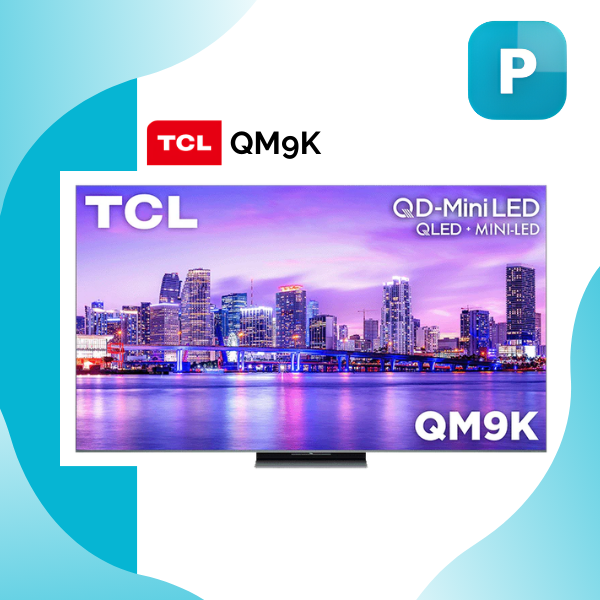
SpecificationTCL X11LTCL QM8K
Display TechnologySQD-Mini LED with WHVA 2.0 Ultra PanelQD-Mini LED with QLED Quantum Dot and CrystGlow WHVA Panel
Peak BrightnessUp to 10,000 nitsUp to 5,000 nits
Local Dimming ZonesUp to 20,736 zonesUp to 3,800 zones
Color Gamut100% BT.20201.07 Billion Colors (Quantum Dot)
Native Refresh Rate144Hz144Hz
Variable Refresh Rate (VRR)48Hz โ€“ 288HzUp to 144Hz
Motion TechnologyDLG Motion 288HzMotion Rate 480 with MEMC
HDR SupportDolby Vision IQ, Dolby Vision, HDR10+, HDR10, HLGDolby Vision IQ, Dolby Vision, HDR10+, HDR10, HLG
IMAX EnhancedYesYes
ProcessorTSR AiPQ ProcessorTCL AIPQ PRO Processor
Smart TV PlatformGoogle TV with Google AssistantGoogle TV with Alexa, Apple HomeKit, AirPlay 2
Gaming FeaturesGame Master Mode, 288Hz Game Accelerator, AMD FreeSync Premium ProGame Accelerator 288, ALLM, AMD FreeSync Premium Pro
HDMI Ports4 HDMI 2.1 ports4 HDMI ports (1 eARC)
Wireless ConnectivityWi-Fi 6, Bluetooth, ChromecastWi-Fi 6 (Wi-Fi 5 on 98"), Bluetooth, Miracast, Chromecast
AudioBang & Olufsen tuning, Dolby Atmos, DTS Virtual:XBang & Olufsen tuning, Dolby Atmos
Available Sizes75", 85", 98"65", 75", 85", 98"
DesignUltra-flat design (2 cm thin edge)Ultra-slim design
MountingVESA Wall Mount CompatibleVESA Wall Mount Compatible

Full Technical Specifications

Feature TCL X11L SQD-Mini LED TV reviews Specifications TCL QM8K Series QD-Mini LED TV Reviews Specifications
AMD FreeSync AMD FreeSync Premium Pro -
Additional Features TCL AI, AI Cinema, AI Gaming, AI Art, Ambient Mode, Art Gallery, Gamebar -
Aspect Ratio 16:9 -
Audio Formats - Dolby Atmos, Dolby Digital+, Dolby Digital, PCM
Audio System Audio by Bang & Olufsen Audio by Bang & Olufsen
Available Screen Sizes 98 inch, 85 inch, 75 inch -
Available Sizes - 65", 75", 85", 98"
Bluetooth Bluetooth 5.4 Bluetooth Personal Audio
Brightness - Up to HDR 5000 Nits
Casting / Screen Mirroring - Google Chromecast Built-in, Apple AirPlay 2
Color Gamut Up to 100% BT.2020 -
Design Flat-thin design (about 2 cm at thinnest point) Ultra Slim Design
Display Colors - 1.07 Billion Colors
Display Technology - QD-Mini LED with QLED Quantum Dot Technology
Dolby Atmos Yes -
Ethernet - 1 Port
Game Features - Game Accelerator 288, Auto Game Mode (ALLM), AMD FreeSync Premium Pro
Gaming & Cinema Modes - Filmmaker Mode, IMAX Enhanced Certification
Gaming Features Game Master Mode, 288Hz VRR Game Accelerator -
HDMI Ports 4 ร— HDMI 2.1 4 HDMI (1 with eARC)
HDR Formats Dolby Vision IQ, Dolby Vision, HDR10+, HDR10, HLG -
HDR Support - Dolby Vision IQ, Dolby Vision Gaming, HDR10+, HDR10, HLG
Hands-free Voice Control Yes -
IMAX Enhanced Yes -
Local Dimming - Precise Dimming L2 (Up to LD3800 Zones)
Local Dimming Zones Up to 20,736 Precise Dimming Zones -
Model 98X11L -
Motion Technology - Motion Rate 480 with MEMC Frame Insertion
Operating System Google TV -
Optical Audio Output - 1 SPDIF Digital Optical
Panel Resolution 3840 ร— 2160 -
Panel Type WHVA 2.0 Ultra Panel CrystGlow WHVA Panel
Peak Brightness Up to 10,000 nits -
Processor TSR AiPQ Processor TCL AIPQ PRO Processor
RF Input - 1 (NTSC / ATSC / ATSC 3.0 NextGen TV)
Refresh Rate 144Hz Native (VRR 48โ€“288Hz / DLG 288Hz) 144Hz Native Refresh Rate
Resolution 4K UHD 4K Ultra HD (3840 ร— 2160)
Series X11L QM8K Series QD-Mini LED QLED 4K UHD Smart TV
Smart Home Compatibility - Amazon Alexa, Google Assistant, Apple HomeKit
Smart TV Platform - Google TV
Sound Technology DTS Virtual:X -
Technology Type SQD-Mini LED -
USB Ports - 1 ร— USB 3.0, 1 ร— USB 2.0
VESA Mount - 65": 300 ร— 300 / 98": 600 ร— 500
Variable Refresh Rate - Up to 144Hz VRR
Voice Assistant Google Assistant Built-in -
Voice Control - Hands-Free Voice Control with Backlit Voice Remote
Warranty - 1 Year Limited Warranty
Wi-Fi Wi-Fi 6 Wi-Fi 6 (65โ€ Model) / Wi-Fi 5 (98โ€ Model)
Wireless Display Miracast -
Year 2026 -
eARC / ARC Yes -

Comparison Overview

TCL X11L vs TCL QM8K In Depth Comparison

When premium Mini LED televisions enter the spotlight, discerning buyers turn to detailed side-by-side evaluations to understand real-world differences. This TCL X11L vs TCL QM8K In Depth Comparison dives into every crucial aspect, from panel engineering to everyday usability, helping you decide which 2026 flagship better suits your home theater or gaming setup. Both models push QD-Mini LED technology to new heights, yet they diverge sharply in brightness, dimming precision, and future-proof features. Whether you prioritize jaw-dropping HDR highlights or balanced all-round performance, this guide delivers clear, unbiased insights without fluff.

Design and Build Quality

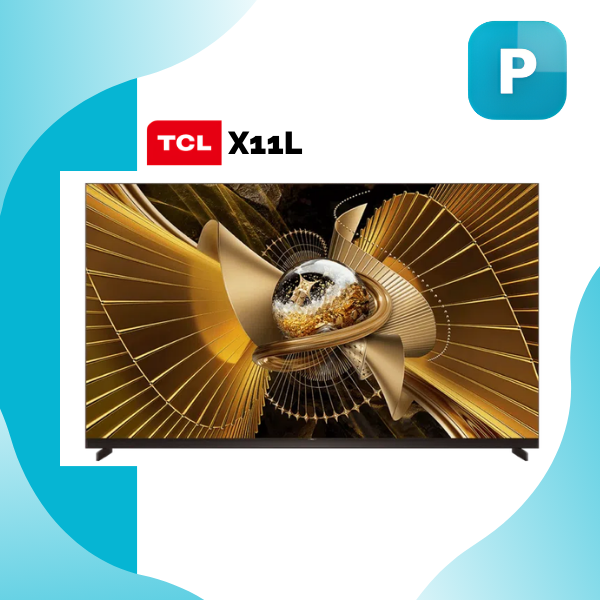
The TCL X11L and TCL QM8K both embrace minimalist aesthetics, yet subtle engineering choices set them apart. The X11L boasts an ultra-flat profile that measures just two centimeters at its thinnest edge, creating a seamless, picture-frame effect when wall-mounted. Its flat-thin design feels premium and modern, with clean lines that disappear into any living space. Available in 75-inch, 85-inch, and 98-inch variants, it caters to large-room enthusiasts who want maximum screen real estate without bulk.

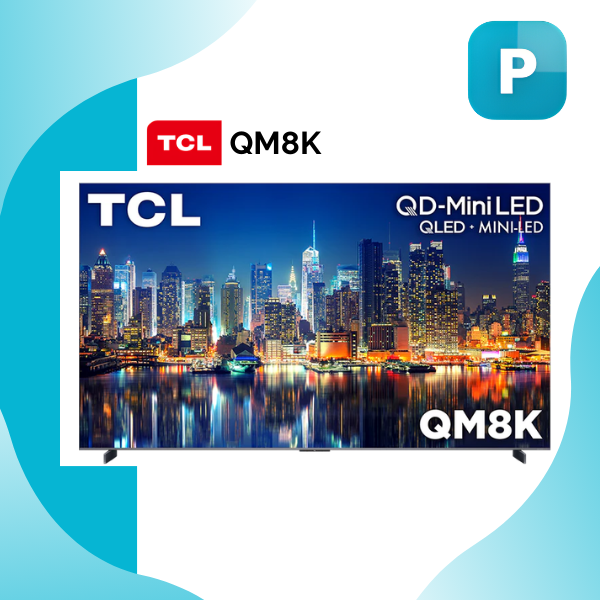
In contrast, the QM8K adopts an equally sleek ultra-slim silhouette across a broader size lineup that includes 65-inch, 75-inch, 85-inch, and 98-inch options. This extra 65-inch choice makes the QM8K more accessible for medium-sized rooms. Both televisions feature sturdy VESA-compatible mounts, but the X11Lโ€™s thinner bezels and refined edge treatment give it a slightly more luxurious presence. Build quality feels solid on each, with no flex or creaking, yet the X11Lโ€™s 2026 construction hints at tighter tolerances and premium materials. If wall-mounting is your priority and you crave that near-invisible look, the X11L edges ahead; however, the QM8Kโ€™s wider size availability offers greater flexibility for different living spaces.

Picture Quality and Display Technology

Picture performance forms the heart of any flagship television, and here the differences become dramatic. The TCL X11L employs SQD-Mini LED backlighting paired with a WHVA 2.0 Ultra Panel, delivering peak brightness that reaches an astonishing 10,000 nits. Combined with up to 20,736 local dimming zones, this creates near-perfect contrast where bright highlights pop against deep, inky blacks without blooming or halo effects. Full 100 percent BT.2020 color gamut coverage ensures vivid, lifelike hues in every scene, while native 144Hz refresh rate expands to VRR from 48 to 288Hz and DLG technology that doubles motion clarity to 288Hz. Supported HDR formats include Dolby Vision IQ, standard Dolby Vision, HDR10+, HDR10, and HLG, plus official IMAX Enhanced certification for cinematic accuracy.

The QM8K relies on QD-Mini LED with QLED Quantum Dot technology and a CrystGlow WHVA Panel. Its peak HDR brightness tops out at 5,000 nitsโ€”still excellent but noticeably lower than the X11L in bright-room conditions. Precise Dimming L2 technology provides up to 3,800 zones, which handles most content well yet cannot match the X11Lโ€™s pinpoint control during complex scenes like starry night skies or fireworks. You get 1.07 billion colors, a solid 144Hz native panel, and VRR capped at 144Hz, supported by Motion Rate 480 with MEMC for smoother sports and action. HDR support mirrors the X11L closely, including Dolby Vision IQ and IMAX Enhanced. Overall, the X11L delivers reference-level contrast and brightness that future-proofs it for next-generation content, while the QM8K remains highly competitive for most viewers who do not demand absolute peak performance.

Smart Features, Gaming, and Performance

Smart platform and gaming capabilities round out the user experience on both sets. Each runs Google TV with hands-free voice control, yet implementation varies slightly. The X11L integrates Google Assistant directly and adds thoughtful extras such as TCL AI, AI Cinema, AI Gaming, AI Art, Ambient Mode, and an Art Gallery for personalized home decoration. Its TSR AiPQ Processor handles upscaling and motion intelligently, while four full HDMI 2.1 ports ensure lag-free 4K120 or 8K-ready connections. Gaming enthusiasts will appreciate Game Master Mode, 288Hz VRR Game Accelerator, and AMD FreeSync Premium Pro, turning the X11L into a serious console or PC companion.

The QM8K also uses Google TV with hands-free voice control via a backlit remote and expands compatibility to Amazon Alexa, Apple HomeKit, and AirPlay 2. Its TCL AIPQ PRO Processor delivers crisp upscaling, and Motion Rate 480 keeps fast action fluid. Gaming features include Game Accelerator 288, Auto Low Latency Mode, and the same AMD FreeSync Premium Pro support. Four HDMI ports (one dedicated eARC) cover most setups, though the X11Lโ€™s confirmed HDMI 2.1 across all inputs feels more future-ready. Connectivity remains strong on both with Wi-Fi 6 (except the QM8Kโ€™s 98-inch model on Wi-Fi 5), Bluetooth, and Miracast or Chromecast. The X11L pulls ahead for hardcore gamers needing maximum refresh-rate headroom and AI-driven optimizations, while the QM8Kโ€™s broader smart-home ecosystem suits households already invested in Apple or Alexa devices.

Comparison Reviews

Early feedback in the TCL X11L vs TCL QM8K In Depth Comparison consistently highlights the X11Lโ€™s superior brightness and zone control as game-changers for HDR enthusiasts. Reviewers praise how its 10,000-nit peaks and massive dimming array produce images that feel three-dimensional even in daylight, something the QM8Kโ€™s 5,000-nit ceiling cannot replicate on the same scale. Gaming communities note the X11Lโ€™s 288Hz VRR advantage eliminates tearing more effectively during fast-paced titles. On the flip side, the QM8K earns praise for delivering 90 percent of the flagship experience at potentially lower price points and with the added 65-inch convenience. Audio performance draws equal acclaim thanks to Bang & Olufsen tuning on both modelsโ€”rich, room-filling sound with Dolby Atmos supportโ€”though the X11Lโ€™s DTS Virtual:X adds an extra layer of virtual height. Overall, expert roundups position the X11L as the 2026 halo product for uncompromising buyers, while the QM8K earns โ€œbest value flagshipโ€ nods for balanced performance across more room sizes.
Final Verdict

After weighing every specification and real-world implication, the TCL X11L emerges as the clear winner in this TCL X11L vs TCL QM8K In Depth Comparison for anyone seeking cutting-edge picture quality and future-proof gaming. Its unmatched 10,000-nit brightness, 20,736 dimming zones, and extended 288Hz VRR capabilities deliver a cinematic and interactive experience that outshines the competition. Choose the X11L if you own a large room, demand reference-level HDR, and plan to keep the television for years. The QM8K remains an outstanding alternative when budget or the 65-inch size matters more; it still outperforms most non-Mini LED models and satisfies 95 percent of users. Either way, both represent TCLโ€™s commitment to accessible premium technologyโ€”yet for pure performance, the X11L sets the new benchmark in 2026.

Community Choice

Which one would you choose?

0%
0%

User Feedback

Leave a comment

Recent Feedback (0)

No feedback yet

Be the first to share your thoughts!

Frequently Asked Questions

Which TV is brighter, the TCL X11L or the TCL QM8K?

The TCL X11L is significantly brighter, with a peak brightness of 10,000 nits compared to the QM8K's 5,000 nits. This makes the X11L the superior choice for very bright rooms and for delivering the most impactful HDR highlights.

Which TV has better contrast and less blooming?

The TCL X11L offers superior contrast and much less blooming. It features up to 20,736 local dimming zones, while the QM8K has up to 3,800 zones. The X11L's vastly higher zone count allows for incredibly precise control over the backlight, resulting in deeper blacks and minimal halo effects around bright objects.

Is the TCL QM8K available in a 65-inch size?

Yes, the TCL QM8K is available in a 65-inch size, as well as 75-inch, 85-inch, and 98-inch options. The TCL X11L starts at a larger 75 inches, making the QM8K a better fit for medium-sized rooms.

Which TV is better for gaming?

While both are exceptional for gaming, the TCL X11L has a slight edge for hardcore gamers. It features a 288Hz VRR (Variable Refresh Rate) Game Accelerator, compared to the QM8K's 144Hz VRR, providing even smoother motion in competitive titles. Both support AMD FreeSync Premium Pro and have Game Master Mode.

Do both TVs have good built-in sound?

Yes, both the TCL X11L and TCL QM8K feature high-quality sound systems tuned by Bang & Olufsen and support Dolby Atmos. The X11L adds DTS Virtual:X for an extra layer of virtual height surround sound.

What are the main differences in smart features?

Both run on Google TV. The X11L features a TSR AiPQ Processor and includes TCL AI modes (Cinema, Gaming, Art) for personalized optimization. The QM8K uses a TCL AIPQ PRO Processor and has broader smart home compatibility, working with Amazon Alexa, Apple HomeKit, and AirPlay 2 in addition to Google Assistant.

Which TV is the better value for money?

The TCL QM8K is likely the better value for most people. It delivers a premium flagship experienceโ€”including excellent brightness and thousands of dimming zonesโ€”at what is expected to be a more accessible price point, and it offers a smaller 65-inch option for those who need it.

Which TV is the overall winner for picture quality?

The TCL X11L is the clear winner for picture quality. Its combination of 10,000 nits peak brightness and over 20,000 local dimming zones sets a new benchmark for 2026, delivering a reference-level HDR performance that the QM8K cannot quite match. It is the choice for uncompromising home theater enthusiasts.