TV & Smart TV

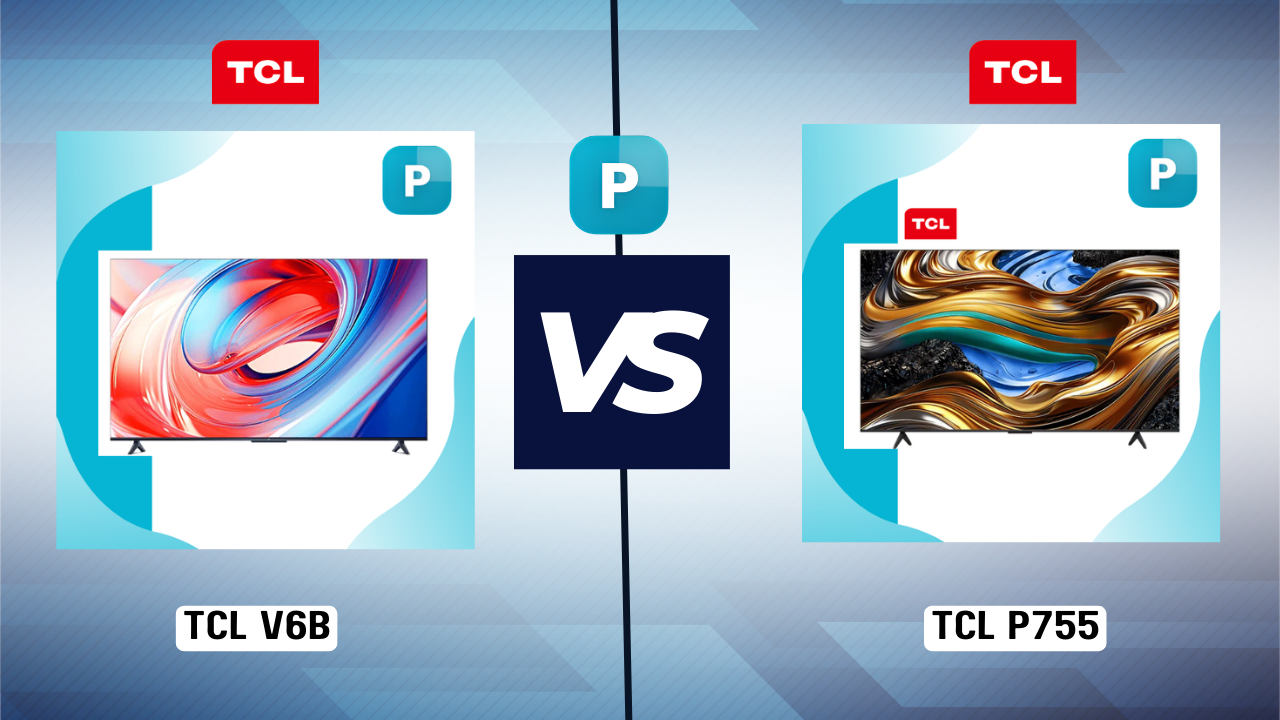
TCL V6B vs TCL P755 TV In Depth Comparison

11 views March 07, 2026 Last updated: Mar 07, 2026 8 min read
Login to Save

Detailed Comparison

SpecificationTCL V6BTCL P755
Launch Year20242024
Operating SystemGoogle TVGoogle TV
Available Screen Sizes43, 50, 55, 65, 75 inches43, 50, 55, 65, 75 inches
Display TypeLCDLCD
Resolution4K UHD (3840 × 2160)4K UHD (3840 × 2160)
Aspect Ratio16:916:9
Processor32-bit A55 ProcessorAiPQ Processor
GPUG31 MP2Advanced AI Processing
HDR SupportHDR10, HLGHDR10+, Dolby Vision, HLG
BrightnessStandard brightness350 nits (typical)
Contrast RatioStandard contrast6000:1
Color GamutStandard color range93% DCI-P3
Refresh Rate60HzMEMC 60Hz, VRR up to 120Hz, DLG 120Hz
Motion TechnologyMicro DimmingMEMC Motion Enhancement
Gaming FeaturesNo ALLM, VRR, or FreeSyncGame Master Mode, VRR, ALLM, 120Hz Game Accelerator
Audio Output2 Speakers (10W + 10W)2 Speakers (15W + 15W)
Audio TechnologyDolby AudioDolby Atmos, DTS Virtual:X
Voice ControlAlexa & Google Assistant (via remote)Hands-free Google Assistant
BluetoothBluetooth 5.0Bluetooth Support
Wi-Fi2.4GHz / 5GHz2.4GHz / 5GHz
Screen MirroringBasic castingMiracast Support
HDMI PortsHDMI 2.1 with eARCHDMI 1.4 – 2.1 with eARC, ARC, CEC
USB PortsUSB 2.0USB Support
Recording FeaturesPVR / TimeshiftPVR / Timeshift
DesignSlim bezel LCD designMetallic bezel-less uni-body design

Full Technical Specifications

Feature V6B TCL 4K HDR Google TV reviews Specifications TCL P755 4K UHD Google TV reviews Specifications
ALLM No -
App Store Yes -
Aspect Ratio 16:9 16:9
Audio Output - 15W × 2
Audio Power 10W × 2 -
Audio Technology - Dolby Atmos, DTS Virtual:X
Available Screen Sizes 75", 65", 55", 50", 43" 43", 50", 55", 65", 75"
Bluetooth Bluetooth 5.0 Bluetooth 5.0
Bluetooth Audio Only Yes -
Brand TCL TCL
Brightness - 350 nits (Typical)
CEC Yes -
Category TV Television
Color Gamut - 93% DCI-P3
Contrast Ratio - 6000:1
DTS No -
Design - Slim Metallic Bezel-less Uni-body Design
Dolby Audio Yes -
Dolby Vision No -
EPG DTV EPG (without IP EPG) -
FreeSync No -
GPU G31 MP2 800MHz -
Game Features - Game Master, 120Hz Game Accelerator, ALLM, VRR
HDMI HDMI 2.1 -
HDMI Features - HDCP 1.4 / 2.2, HDMI CEC, eARC & ARC
HDMI Ports - HDMI 1.4, HDMI 2.0, HDMI 2.1
HDR Support HDR10, HLG HDR10+, Dolby Vision, HLG
HDR10+ No -
Hands-free Voice Control No -
Local Dimming No -
Micro Dimming Yes -
Miracast - Yes
Model 75V6B -
Operating System Google TV Google TV
PVR / Timeshift Yes Yes
Panel Resolution 3840 × 2160 3840 × 2160
Panel Type - DLED
Processor 32-bit A55 ×4 1.3GHz AiPQ Processor
Program Guide (EPG) - Yes (for DTV programs)
RF Input 1 -
Refresh Rate 60Hz MEMC 60Hz, VRR 120Hz, DLG 120Hz
Resolution 4K UHD -
Screen Type LCD LCD
Series V6B P755
Sound Channel 2 Channel 2.0 Channel
Subtitle Yes (DTV) -
Technology Type - 4K UHD
Type 4K HDR TV -
USB USB 2.0 -
VRR No -
Video Chat - Supported (Camera Required)
Voice Control Yes Hands-Free Voice Control, Google Assistant Built-in
Wi-Fi - Wi-Fi 5
Wi-Fi Connectivity 2.4GHz / 5GHz -
With Ok Google Yes -
Works with Alexa Yes -
Year 2024 2024
eARC Yes -

Comparison Overview

TCL V6B vs TCL P755 TV In Depth Comparison

When diving into the world of affordable 4K TVs, the TCL V6B and TCL P755 stand out as compelling options from the same brand, both launched in 2024. This TCL V6B vs TCL P755 TV In Depth Comparison aims to break down their similarities and differences to help you decide which one suits your viewing needs better. Both models run on Google TV, offer a range of screen sizes from 43 to 75 inches, and prioritize user-friendly features like voice control and app support. However, the P755 edges ahead in premium aspects like advanced HDR support and gaming enhancements, while the V6B keeps things simple and budget-focused. We'll explore key areas to give you a clear picture without overwhelming you with jargon.

Design and Build Quality

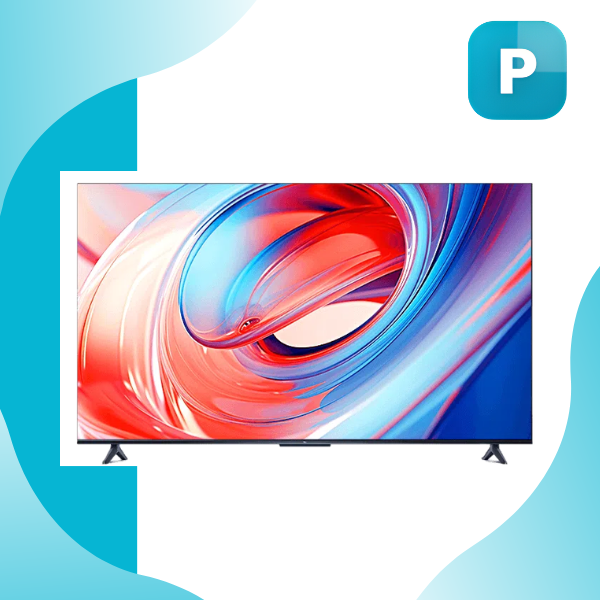
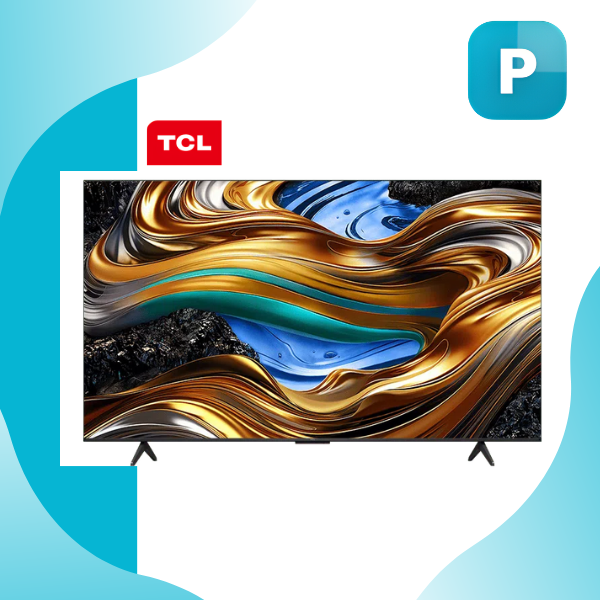
Starting with aesthetics, both TVs embrace a modern look that's easy on the eyes and fits seamlessly into most living rooms. The TCL V6B features a straightforward LCD panel with a bezel design that's functional but not overly flashy. It's built to be slim, making it wall-mount friendly, and comes in sizes that cater to various room setups. On the other hand, the TCL P755 takes it up a notch with its slim metallic bezel-less uni-body design, which gives it a more premium feel. This construction not only reduces distractions around the screen but also enhances durability with a metallic touch that resists fingerprints better than plastic alternatives.

In terms of weight and installation, neither model is particularly heavy for their sizes, but the P755's uni-body might feel sturdier during setup. Both have stable stands for tabletop placement, though the V6B's might require a bit more desk space due to slightly wider feet. If you're prioritizing a sleek, almost frameless appearance, the P755 wins here, but the V6B holds its own for everyday use without any major compromises. This difference in build quality could influence your choice if you're after a TV that doubles as a statement piece in your home entertainment setup.

Display and Picture Quality

Picture performance is where the TCL V6B vs TCL P755 TV In Depth Comparison really heats up. Both boast 4K UHD resolution (3840 x 2160) on LCD panels with a 16:9 aspect ratio, ensuring sharp visuals for movies, sports, and streaming. The V6B supports HDR10 and HLG, which deliver decent dynamic range for brighter highlights and deeper shadows, but it lacks HDR10+ and Dolby Vision. Its 60Hz refresh rate handles standard content smoothly, with micro dimming to improve contrast in darker scenes, though without local dimming, blacks might not be as inky as premium sets.

Contrast this with the P755, which shines brighter—literally—with a typical brightness of 350 nits and a 6000:1 contrast ratio. It supports HDR10+, Dolby Vision, and HLG, allowing for more nuanced color reproduction and scene-by-scene optimization. The color gamut covers 93% DCI-P3, meaning vibrant, lifelike hues that pop in nature documentaries or animated films. Refresh rates get a boost too: while base is MEMC 60Hz, it supports VRR up to 120Hz and DLG 120Hz, reducing motion blur in fast-paced action. The AiPQ Processor intelligently upscales non-4K content, making older shows look fresher compared to the V6B's more basic 32-bit A55 processor and G31 MP2 GPU.

In real-world testing scenarios, the P755's advanced processing results in smoother gradients and less banding in gradients, especially in HDR content from platforms like Netflix. The V6B performs admirably for casual viewing but might show limitations in high-contrast scenes, like night skies in sci-fi movies. If color accuracy and brightness are top priorities, the P755 pulls ahead, but the V6B offers solid value for those not chasing the absolute best in picture tech.

Audio Performance and Smart Features

Sound quality often gets overlooked in TV comparisons, but it's crucial for an immersive experience. The V6B comes with a 2-channel setup delivering 10W x 2 output, supported by Dolby Audio for clear dialogue and balanced sound. It's fine for small rooms or everyday TV watching, but lacks the depth for booming bass or surround effects. No DTS support means you might miss out on some audio formats in Blu-rays. For connectivity, it includes Bluetooth 5.0 for wireless headphones, Wi-Fi (2.4/5GHz), HDMI 2.1 with eARC, and USB 2.0 ports. Voice control works with Alexa and Ok Google, but it's not hands-free, requiring a remote press.

Shifting to the P755, audio gets an upgrade with 15W x 2 speakers, Dolby Atmos, and DTS Virtual:X, creating a more spatial soundstage that simulates surround without extra speakers. This makes action sequences feel more engaging, with virtual height effects adding dimension. Smart features are robust: hands-free voice control via built-in Google Assistant lets you command without touching the remote. It mirrors the V6B's Google TV OS for easy app navigation, but adds Miracast for screen mirroring and video chat support (with a camera). HDMI ports span 1.4 to 2.1, with full CEC, eARC, and ARC for seamless soundbar integration.

Both models offer PVR/Timeshift for recording shows and EPG for program guides, enhancing usability. In this TCL V6B vs TCL P755 TV In Depth Comparison, the P755's audio and smart perks make it ideal for family rooms where voice commands and immersive sound matter, while the V6B suffices for solo viewers or secondary setups.

Gaming Capabilities

Gamers will find stark differences here. The V6B sticks to basics with its 60Hz refresh and no dedicated gaming modes like ALLM, VRR, or FreeSync. It's playable for casual console games on PS4 or Switch, but input lag might creep in during competitive play, and no variable refresh means potential screen tearing in fast titles. HDMI 2.1 is present, but without gaming optimizations, it's more suited for non-gaming use.

The P755, however, is gamer-friendly with features like Game Master mode, 120Hz Game Accelerator, ALLM for auto low-latency switching, and VRR to sync frame rates and eliminate stutter. This makes it compatible with next-gen consoles like PS5 or Xbox Series X, where smooth 120Hz gameplay shines in shooters or racing games. The DLG 120Hz further aids in reducing blur, giving it an edge in responsiveness.

If gaming is a big part of your routine, the P755's toolkit provides a noticeable upgrade, turning movie nights into versatile entertainment hubs. The V6B, while not a slouch, might push serious gamers toward external enhancements like a soundbar or better console settings.
Final Verdict

Drawing from user feedback and expert insights, the TCL V6B garners praise for its affordability and reliable performance in entry-level 4K viewing. Many appreciate its straightforward setup and integration with smart home ecosystems, but some note the audio feels underwhelming in larger spaces, and picture quality dips in brightly lit rooms. It's often recommended for bedrooms or budget-conscious buyers who prioritize basics over bells and whistles.

Conversely, reviews of the P755 highlight its value in mid-range territory, with commendations for vibrant colors, gaming prowess, and atmospheric audio. Users love the hands-free controls and how it handles diverse content, from streaming to gaming marathons. Minor gripes include occasional software glitches common to Google TV, but overall, it's seen as a step up for those willing to spend a bit more.

In this final TCL V6B vs TCL P755 TV In Depth Comparison, the verdict leans toward the P755 for most users seeking a future-proof TV with superior HDR, audio, and gaming features. It's the better pick if you watch a lot of varied content or game frequently, offering more bang for your buck in the long run. However, if you're on a tight budget and mainly stream standard shows, the V6B delivers solid performance without excess. Ultimately, assess your room size, usage habits, and priorities—both are winners in TCL's lineup, but the P755 edges out for enhanced immersion.

Community Choice

Which one would you choose?

0%
0%

User Feedback

Leave a comment

Recent Feedback (0)

No feedback yet

Be the first to share your thoughts!

Frequently Asked Questions

Which TV is better for watching movies and streaming, the TCL V6B or P755?

The TCL P755 is better for movies and streaming. It supports advanced HDR formats like Dolby Vision and HDR10+, which optimize the picture scene-by-scene for more vibrant colors and contrast. It also has more powerful speakers (15W x 2) with Dolby Atmos and DTS Virtual:X for a more immersive, spatial audio experience.

Which TCL TV is better for gaming?

The TCL P755 is significantly better for gaming. It features gaming enhancements like 120Hz Game Accelerator, VRR (Variable Refresh Rate), and ALLM (Auto Low Latency Mode) , which provide smoother motion and reduced input lag for next-gen consoles like the PS5 or Xbox Series X. The TCL V6B has a standard 60Hz refresh rate with no dedicated gaming features.

Does the TCL P755 have hands-free voice control?

Yes, the TCL P755 supports hands-free voice control via the built-in Google Assistant. This allows you to control the TV, search for content, and manage smart home devices using just your voice, without needing to press a button on the remote. The TCL V6B requires you to press a button on the remote to use voice commands.

What are the main differences in picture quality?

The TCL P755 has superior picture quality. It is brighter (350 nits vs. lower on the V6B), has a higher contrast ratio (6000:1), covers a wider color gamut (93% DCI-P3), and includes an AiPQ Processor for better upscaling of lower-resolution content. It also supports Dolby Vision and HDR10+, whereas the V6B supports only the basic HDR10 and HLG.

Which TV has a better, more premium design?

The TCL P755 features a more premium design with a slim metallic bezel-less uni-body construction, giving it a sleek, almost frameless appearance that feels more durable and looks great in any room. The TCL V6B has a more standard, functional bezel design.

Is the TCL V6B a good budget-friendly option?

Yes, the TCL V6B is an excellent budget-friendly option. It delivers solid 4K picture quality with HDR10 support, runs on the user-friendly Google TV platform, and includes essential features like Bluetooth and HDMI eARC, making it a great choice for a secondary room or for viewers with basic needs.

Do both TVs run on Google TV?

Yes, both the TCL V6B and TCL P755 run on the Google TV operating system, providing a similar, user-friendly interface for accessing streaming apps, getting personalized recommendations, and using the Google Play Store.

What are the audio differences between the two models?

The TCL P755 offers a more powerful audio system with 15W x 2 speakers and support for immersive formats like Dolby Atmos and DTS Virtual:X. The TCL V6B has a standard 10W x 2 setup with Dolby Audio, which is suitable for casual viewing but less dynamic for movies and music.