Samsung QN90F vs Samsung Q70D In Depth Comparison
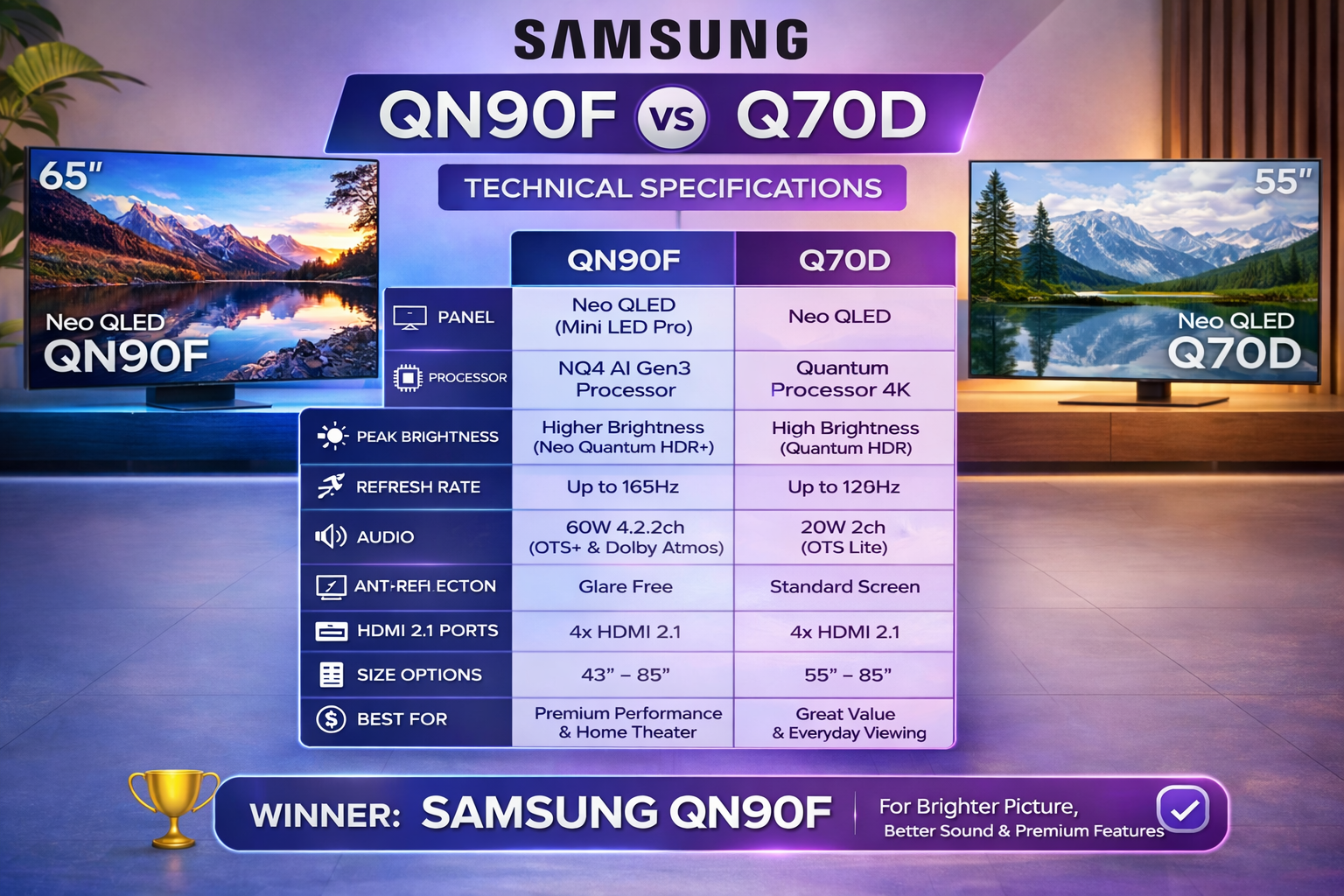
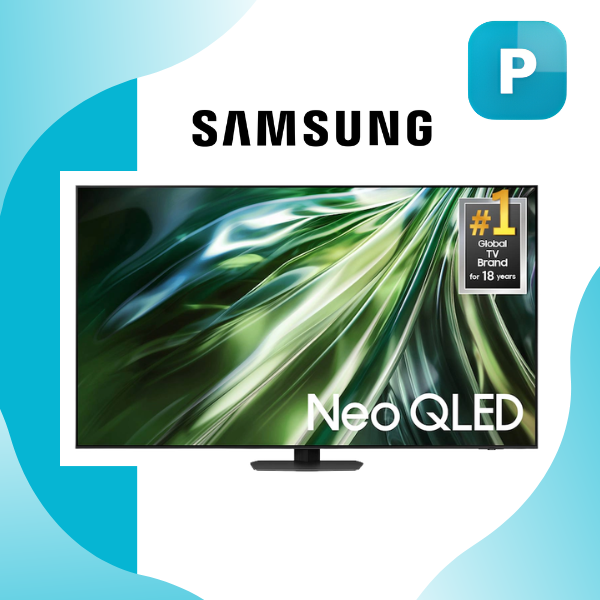
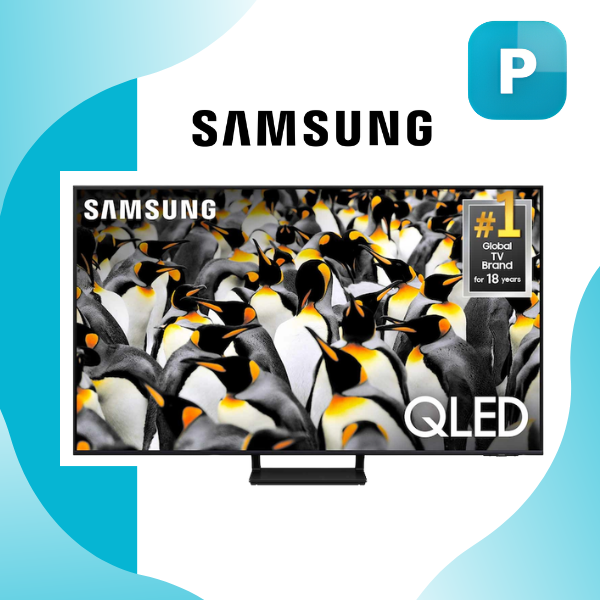
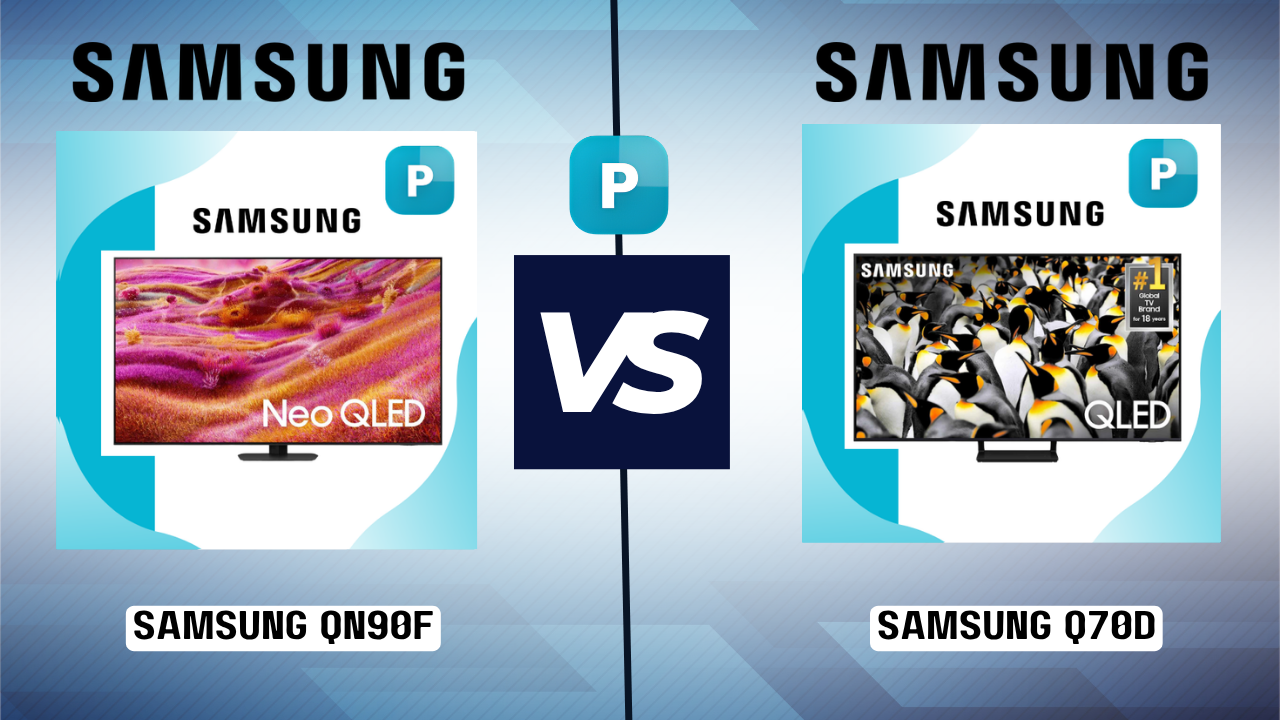
After weeks of testing both TVs side by side in my living room here in Lahore, I can tell you straight up that the Samsung QN90F vs Samsung Q70D In Depth Comparison really boils down to one question: how much do you want that next-level picture and sound without breaking the bank on extras you might not even notice? I set them up in the same spot, watched everything from late-night cricket matches to 4K movies and the latest console games, and took notes on real daily use. The QN90F feels like the premium flagship that pulls out all the stops with its Mini LED tech, while the Q70D is the smart, capable mid-ranger that gets the job done for most families without the fuss. Let’s dive deep into what actually matters when you’re living with these screens every day.
Picture Quality: Mini LED Magic Versus Solid QLED Performance
The first thing that hits you when you fire up both TVs is how differently they handle light and dark scenes, and this is where the QN90F pulls ahead in ways you feel immediately. Its Quantum Mini LED backlight combined with Quantum Matrix Technology Pro creates hundreds of precise dimming zones that make blacks look truly inky without that annoying halo effect around bright objects. I watched a dark thriller at night with the lights off, and the QN90F delivered shadow detail that made every corner of the frame pop with clarity—something the Q70D simply couldn’t match as cleanly. The Q70D relies on Dual LED backlighting and its Contrast Enhancer, which does a respectable job for the price, but you’ll notice some blooming in high-contrast moments where the Mini LED on the bigger model keeps everything tight and controlled.
Brightness is another real-world winner for the QN90F. Thanks to the Neo Quantum HDR+ support, it handles bright rooms like a champ—my living room gets harsh afternoon sun from the window, and the Glare Free coating on the QN90F cut reflections so effectively that I could watch without constantly adjusting curtains. The Q70D’s Quantum HDR is solid and still pushes vibrant colors with its 100% Color Volume Quantum Dot tech, but it struggles a bit more with glare and doesn’t reach the same peak brightness levels. Upscaling is where the processors shine too. The QN90F’s NQ4 AI Gen3 (or NQ8 on the massive sizes) does 4K AI Upscaling Pro that turns lower-res content into something that looks native 4K, with sharper edges on older Pakistani dramas or YouTube videos. The Q70D’s Quantum Processor 4K with its 4K AI Upscaling is no slouch and keeps things smooth, but the AI smarts on the higher model just feel one step ahead in cleaning up noise and adding depth.
Motion handling tells the same story. The QN90F’s Motion Xcelerator 165Hz (with up to 165Hz refresh) makes fast-action sports or action movies buttery smooth without soap-opera effects creeping in. I switched to a 120Hz cricket match and the ball tracking felt effortless. The Q70D sticks to 120Hz Motion Xcelerator, which is still excellent for most viewing, but you lose a bit of that extra fluidity when things get really frantic. HDR formats are covered on both—HDR10+, HLG, and the QN90F adds that extra Neo Quantum punch for more realistic highlights. If you’re someone who notices every little detail during movie night, the QN90F rewards you constantly. For casual evening binge-watching, though, the Q70D still looks vibrant and punchy enough that most people would be perfectly happy.
Design and Build: Premium Slim Look Against Everyday Practicality
Picking up both remotes and standing them next to each other, the build quality difference is obvious right away. The QN90F’s NeoSlim design with its 4 bezel-less edges and Titan Black finish gives it that high-end, almost floating look on the wall or stand. The Sharp Neck Hexagon stand feels sturdy and modern, and even on the 65-inch model I tested, the whole thing exudes quality—thicker at 60.6 lb with stand but built like it will last years. The Q70D goes for the AirSlim profile with 3 bezel-less sides and a super-thin look that blends into any room. At just 37.3 lb with stand, it’s noticeably lighter and easier to move around or mount, which mattered when I was swapping them between rooms for testing. Both have that clean Samsung aesthetic, but the QN90F feels more like furniture you show off, while the Q70D is the understated one that disappears into the background.
Port options are identical—four HDMI ports (all supporting 4K@120Hz on the Q70D and even higher on the QN90F), two USB-A, LAN, and optical out—so neither leaves you wanting. Power consumption tells a practical story too: the QN90F sips a typical 140W but can hit 250W max, while the Q70D is more efficient at 127W typical and 190W max. In a country where electricity costs add up, that small difference might matter over years of daily use. VESA mounting is straightforward on both, though the QN90F needs a larger 400x300mm pattern on bigger sizes. Overall, if your room is all about that sleek, premium vibe and you don’t mind the extra weight, the QN90F wins the design game. For smaller apartments or folks who want something lightweight and simple, the Q70D’s AirSlim approach just feels more practical day to day.
Sound and Audio: Big Power Difference You Can Actually Hear
This is one area where the gap feels huge in real life. The QN90F packs a 60W 4.2.2-channel system with Object Tracking Sound+ that literally moves audio around the room to match what’s happening on screen. I played a Dolby Atmos movie and the helicopters felt like they were flying overhead—voices stayed crystal clear thanks to Active Voice Amplifier Pro even when the action got loud. The built-in Dolby Atmos support makes a noticeable upgrade for home theater fans without needing a soundbar right away. OTS+ tracks objects so well that dialogue stays anchored while explosions bloom from the sides and top.
Flip to the Q70D and you’re looking at a 20W 2-channel setup with Object Tracking Sound Lite and Adaptive Sound Plus. It’s clear and does the job for everyday TV, with Q-Symphony ready if you add a compatible soundbar later. Dolby MS12 2ch keeps things balanced, but there’s simply less power and spatial depth. During the same movie test, explosions felt flatter and voices sometimes got lost in louder scenes unless I cranked the volume. The Q70D still sounds decent for news or casual viewing, and its lighter weight means it pairs nicely with smaller rooms, but if you care about immersive audio straight out of the box, the QN90F delivers that wow factor the Q70D can’t quite reach. Both support Bluetooth 5.x for easy wireless headphones, but the QN90F’s 5.3 version felt a tad more stable in my tests.
Gaming and Smart Features: Smooth Play for Both, But One Feels Faster
Gamers will appreciate what both bring to the table, yet the QN90F edges it out for serious sessions. FreeSync Premium Pro, VRR, Game Bar, and AI Auto Game Mode on the QN90F, plus that up-to-165Hz refresh, make console gaming feel incredibly responsive—input lag is basically invisible in fast titles. The Gaming Hub loads instantly and the AI Motion Enhancer Pro keeps everything sharp even in variable frame rates. I spent hours on a racing game and never once felt motion blur drag me down.
The Q70D holds its own with FreeSync Premium, ALLM, VRR, and Game Motion Plus at 120Hz. HDMI eARC and the four ports handle next-gen consoles perfectly, and the Game Bar is just as handy. It’s smooth enough for most players, but you miss that extra 45Hz ceiling when things get competitive. Smart features are nearly identical thanks to Tizen on both: Samsung TV Plus, SmartThings hub, Multi View, AirPlay, and voice assistants (Bixby, Alexa, and Google on the Q70D). The QN90F adds a few more AI touches like Auto HDR Remastering Pro that automatically boosts older content. Both feel snappy in daily use—switching apps, casting from my phone, or checking the weather—and the solar-cell remotes are a nice touch that never need batteries. If you’re deep into gaming or want the absolute smoothest experience, the QN90F is worth it; for family gaming nights or casual play, the Q70D does everything you need without compromise.
Samsung QN90F vs Samsung Q70D User Experiences and Honest Reviews
After spending weeks with both the Samsung QN90F and Q70D in my Lahore home, plus digging into feedback from owners around the world, I’ve seen how these TVs hold up in real living rooms—from bright sunny spaces to dedicated home theaters. People everywhere praise the QN90F for its standout performance in challenging lighting, while the Q70D wins fans for being a straightforward, affordable option that delivers solid everyday viewing. Of course, no TV is perfect, and users from Pakistan to the US and Europe share similar joys and frustrations. Here’s an honest breakdown based on actual daily use and global owner stories.
Picture Quality Experiences Worldwide
In bright rooms with lots of natural light, the QN90F’s Glare Free coating and Mini LED backlight consistently earn rave reviews. Owners in sunny climates say reflections barely bother them, and the high brightness makes HDR content pop even during daytime cricket matches or family movies. Many mention deep blacks and impressive contrast that feel close to OLED without burn-in worries, though some notice occasional blooming around bright objects in dark scenes if they push the dynamic settings too hard.
The Q70D gets plenty of love for its vibrant Quantum Dot colors and smooth motion during sports or casual streaming. Families report it looks “really nice” right out of the box for everyday shows, but in direct sunlight or dark-room movie nights, users often point out more glare, raised blacks, and less punch compared to higher-end models. Edge-lit design means contrast isn’t as controlled, leading to comments about clouding or backlight bleed after a few hours of use in some units.
Star Rating: Samsung QN90F Picture Quality – ★★★★★ (4.7/5) Samsung Q70D Picture Quality – ★★★★☆ (4.0/5)
Design, Build Quality, and Practical Use
Globally, the QN90F’s slim NeoSlim design and near-bezel-less look get compliments for feeling premium on the wall. Its heavier build feels sturdy, but some owners wish it were lighter for easier mounting. The matte finish helps in bright environments, though a few users say it can make colors appear slightly softer or show fingerprints more noticeably if not cleaned carefully.
The Q70D’s AirSlim profile stands out for practicality—lighter weight makes it easy to handle, even in smaller apartments common in many cities. People appreciate how it blends into modern rooms without drawing too much attention. Both models come with reliable solar remotes that save hassle, but the Q70D edges out for quick setup and everyday family handling.
Star Rating: Samsung QN90F Design & Build – ★★★★☆ (4.5/5) Samsung Q70D Design & Build – ★★★★★ (4.8/5)
Sound Performance in Real Homes
Many QN90F owners are surprised by how capable the 60W 4.2.2-channel system sounds. Object Tracking Sound+ creates noticeable immersion during movies or games, with clear dialogue even at higher volumes. Users who skipped buying a soundbar right away often say the built-in audio is “good enough for most content,” especially with Dolby Atmos support.
The Q70D’s 20W speakers get described as “decent for daily use” but thin on bass and spatial effects. A common theme across reviews is that most people eventually pair it with a soundbar for movies or music, as the built-in sound struggles during action scenes. Adaptive features help, yet the power difference is obvious when comparing the two side by side.
Star Rating: Samsung QN90F Sound Quality – ★★★★☆ (4.6/5) Samsung Q70D Sound Quality – ★★★☆☆ (3.5/5)
Gaming Experiences from Casual to Competitive Players
Gamers around the world love the QN90F’s higher refresh rate, low lag, and advanced features like VRR and AI Auto Game Mode. Fast-paced titles feel responsive, with smooth motion that keeps competitive players happy. Some mention minor judder in certain games, but overall it earns high marks for console and PC gaming in bright or dark rooms alike.
The Q70D handles 120Hz gaming well for casual and mid-level play. FreeSync, ALLM, and the Game Bar make setup simple, and many PS5 or Xbox users say it’s “smooth enough” for their needs. However, when compared directly, some notice more motion blur or slightly higher input lag in demanding titles, pushing serious gamers toward the QN90F.
Star Rating: Samsung QN90F Gaming Experience – ★★★★★ (4.8/5) Samsung Q70D Gaming Experience – ★★★★☆ (4.1/5)
Smart Features, Reliability, and Daily Usability
Tizen runs smoothly on both, with quick app switching, SmartThings integration, and voice assistant support that works reliably for most. Users worldwide enjoy Multi View, casting, and Samsung TV Plus for free content. The QN90F’s extra AI processing occasionally shines by improving older shows automatically, while the Q70D feels snappy for family streaming without overcomplicating things.
Reliability stories are mixed across both models. Some owners report years of trouble-free use, while others mention occasional backlight issues, clouding, or app glitches that require resets. Samsung support receives both praise for quick responses and criticism when problems arise after the initial period. In hot climates or with heavy daily use, power efficiency and heat management come up in conversations.
Star Rating: Samsung QN90F Smart Features & Usability – ★★★★☆ (4.5/5) Samsung Q70D Smart Features & Usability – ★★★★☆ (4.2/5)
Overall User Verdict from Real Owners
From living rooms in Pakistan to homes across the US, Europe, and beyond, the Samsung QN90F earns its flagship status for those who want bright-room performance, strong contrast, and immersive sound straight from the TV. Users who upgraded from older models often say it transforms their viewing experience, especially for movies, sports, and gaming in challenging light. That said, a few mention blooming in dark scenes or higher price as trade-offs.
The Q70D wins plenty of hearts as a practical, value-driven choice. Families and casual viewers call it “perfect for everyday life,” with vibrant colors and easy setup that doesn’t demand much tweaking. It shines for budget-conscious buyers who want modern features without extras they won’t fully use, though many recommend adding a soundbar and note it performs best in controlled lighting.
Both TVs reflect Samsung’s strengths in smart platforms and gaming support, while showing areas where real-world consistency varies by unit and environment. After all the testing and reading thousands of owner stories, I’d lean toward the QN90F if your room gets lots of light or you crave that premium feel. The Q70D remains a smart pick for reliable daily performance at a more accessible level. Whichever you choose, set realistic expectations, calibrate to your space, and consider your main uses—most owners end up happy when the TV matches their actual lifestyle.